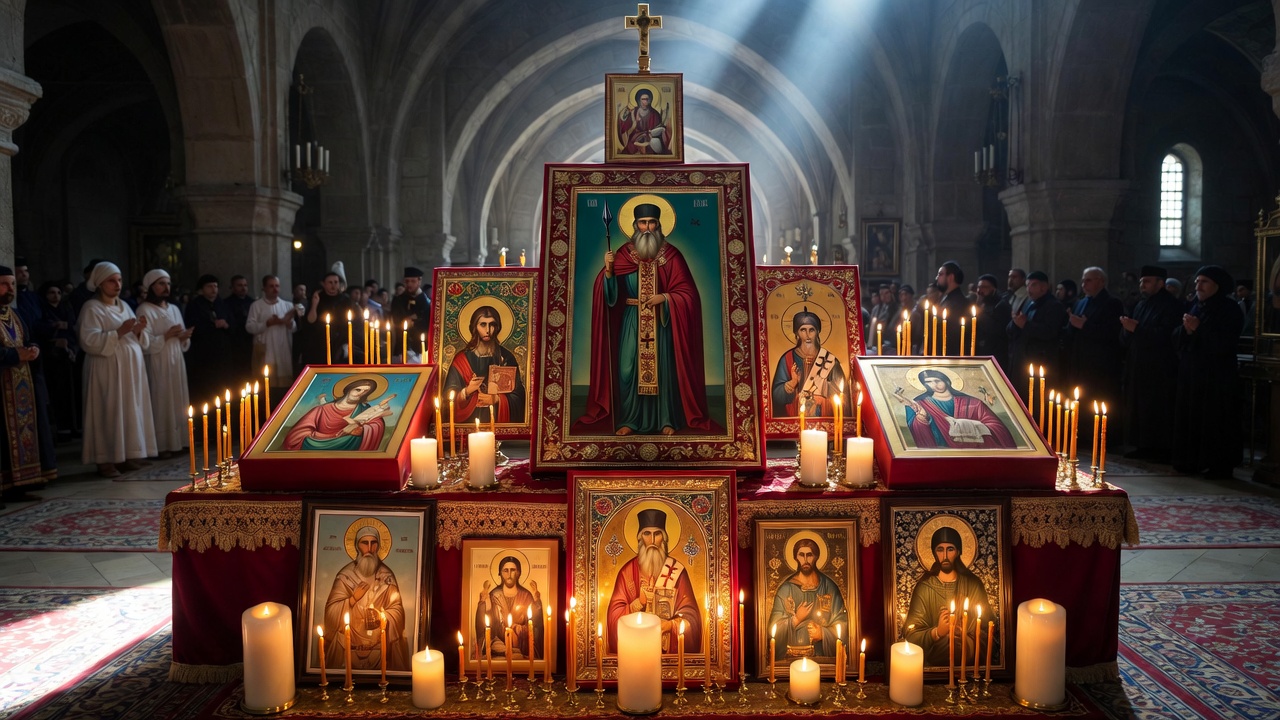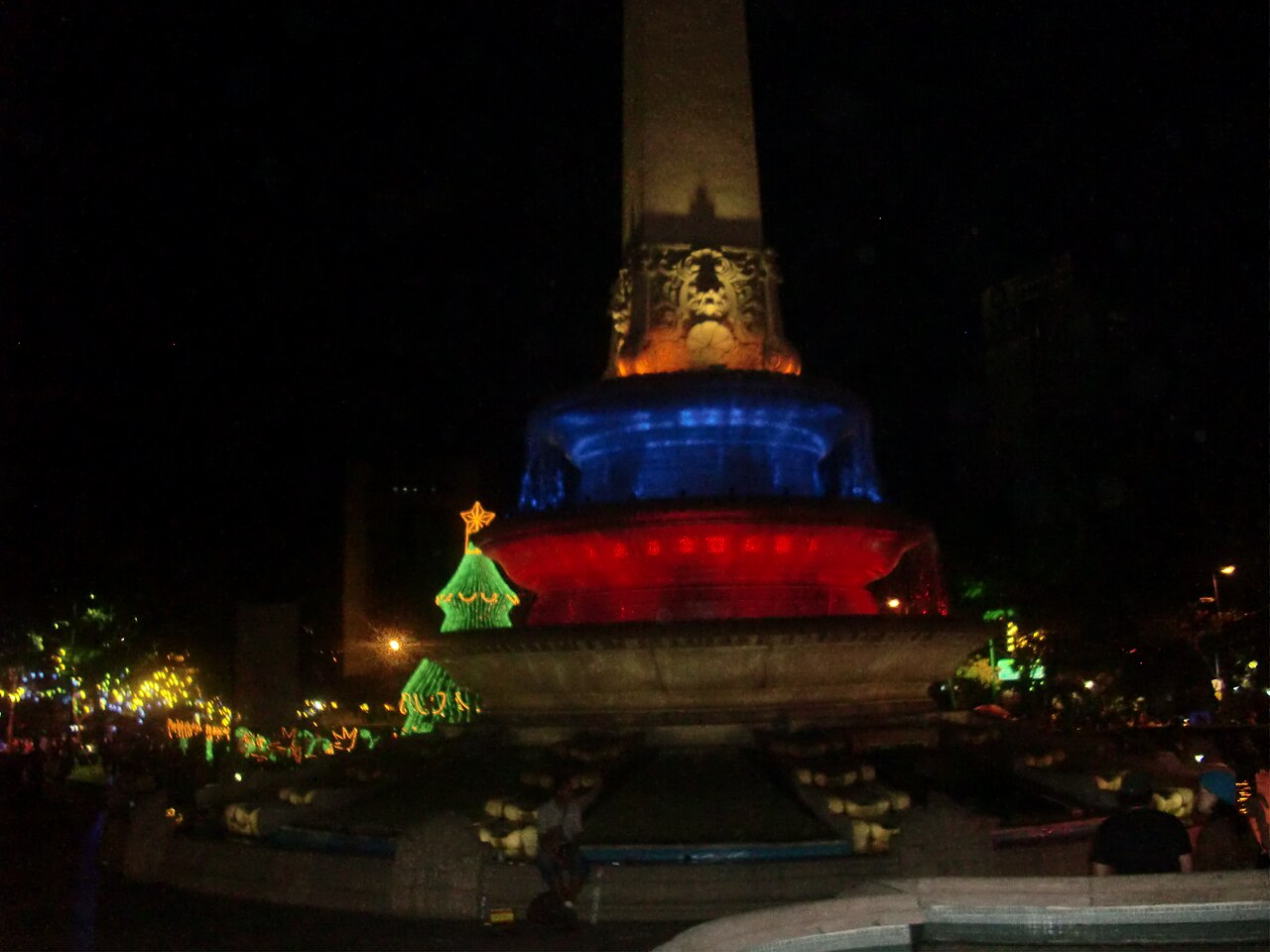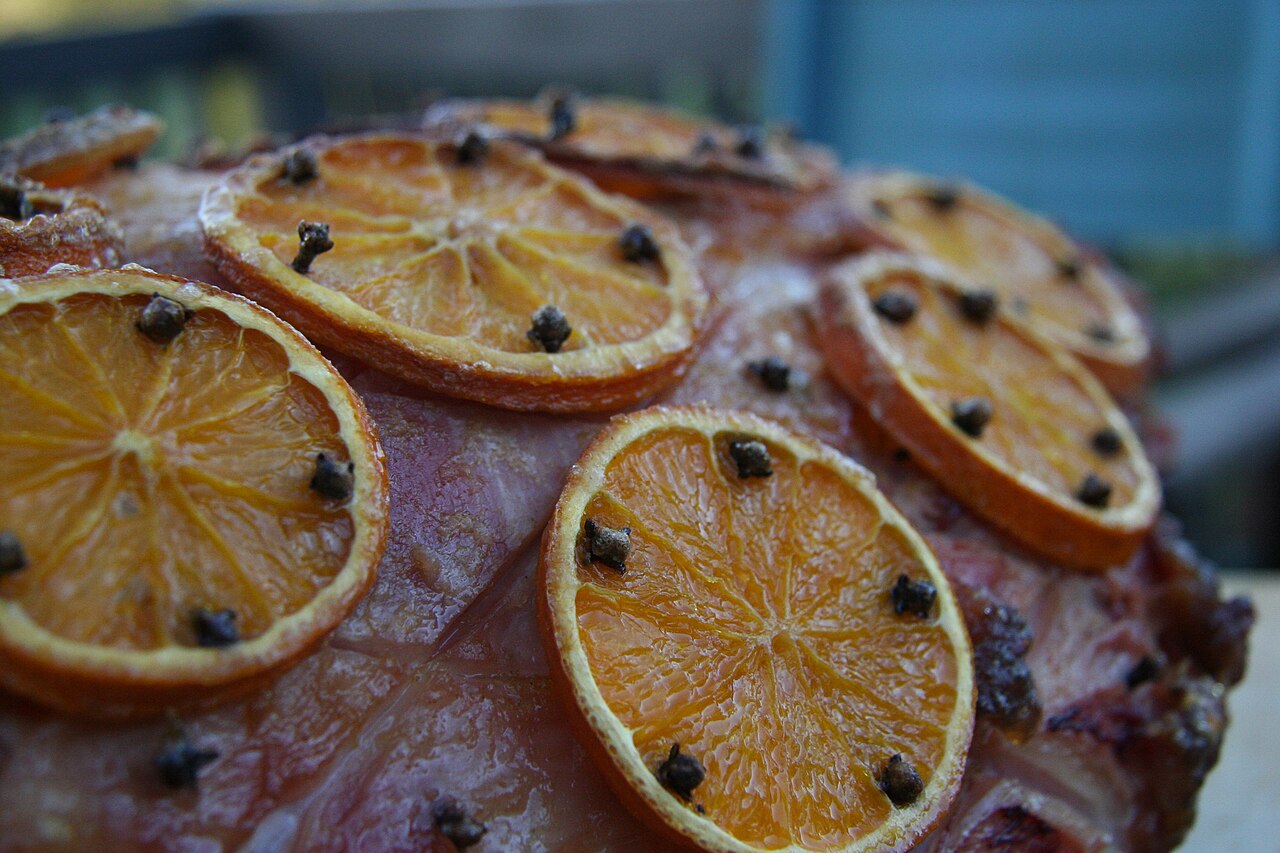
Ask people what Christmas tastes like and you will get a different answer in every country. For one family it is a dark pudding set alight at the table. For another it is corn dough steamed in husks, a spicy stew scooped up with flatbread, or a cold slice of sweet bread with a cup of spiced wine.
This guide gathers 30 traditional Christmas dishes from around the world. Each entry tells you what the dish is, where it comes from, and how it is eaten, so you finish with real knowledge rather than a list of names. They are grouped by region, with a section for festive drinks at the end and a quick reference table to round things off.
For the bigger picture of the holiday, see our complete guide to Christmas, and for the customs behind the food, our guide to Christmas around the world.
Europe
Europe’s Christmas table leans on rich breads, dried fruit, and slow roasts built to warm a cold midwinter. Many of the treats keep for weeks, a holdover from the days when winter baking had to last.
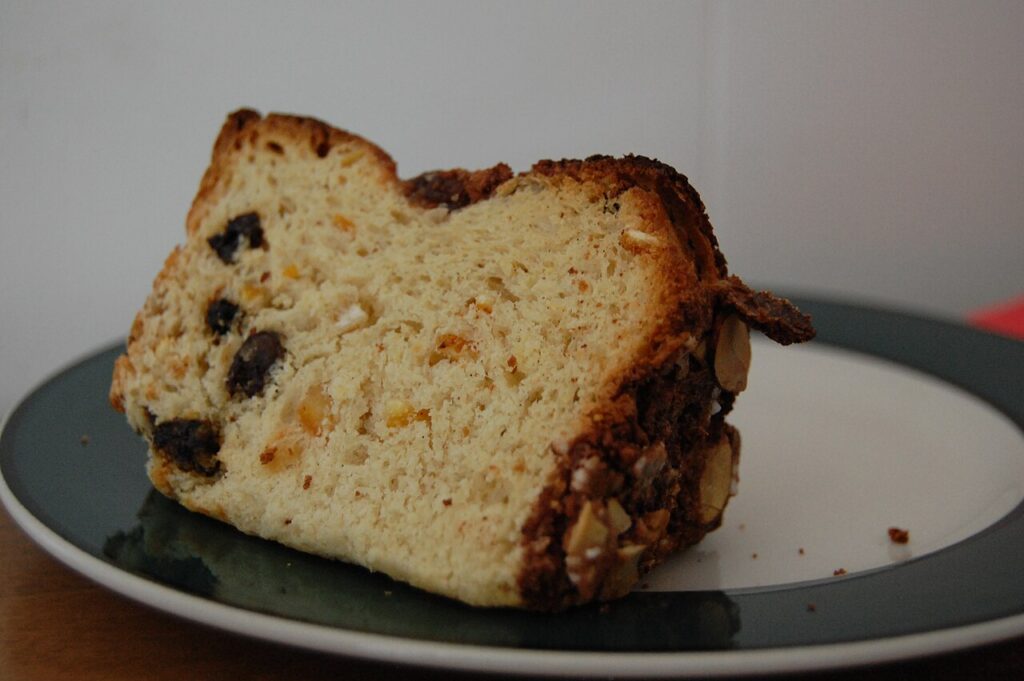
1. Panettone (Italy)
Panettone is a tall, domed sweet bread studded with candied citrus peel and raisins. It comes from Milan, where it grew over time from a simple enriched bread into the tall, airy loaf sold today. Italians eat it through the season, sliced into wedges and served with coffee, sweet wine, or a spoonful of mascarpone cream. A plainer, star shaped cousin called pandoro, from Verona, often sits beside it on the table.
2. Stollen (Germany)
Stollen is a dense fruit bread packed with nuts, candied peel, and often a ribbon of marzipan through the middle. The heavy dusting of powdered sugar is said to represent the Christ child wrapped in swaddling cloth. The city of Dresden is famous for its version and protects the name “Dresdner Christstollen.” Each December the city parades a giant stollen weighing several tons through its streets before slicing it for the crowd.
3. Lebkuchen (Germany)
Lebkuchen are soft, spiced cakes somewhere between gingerbread and a cookie, flavored with honey, cinnamon, cloves, and nuts. The city of Nuremberg has baked them since the Middle Ages. You will find them stacked at every German Christmas market, often shaped into hearts and iced with messages. The finest grade, Elisenlebkuchen, uses almost no flour and a high share of nuts.
4. Bûche de Noël (France)
The bûche de Noël, or Yule log, is a sponge cake rolled around cream, frosted with chocolate, and scored to look like a log of wood. The shape is a nod to the old custom of burning a real Yule log over the Christmas season. The cake itself is a more recent invention of French pastry chefs, perfected in the late 1800s. It is often finished with meringue mushrooms and a dusting of sugar “snow,” and modern chefs compete to reinvent it each year.
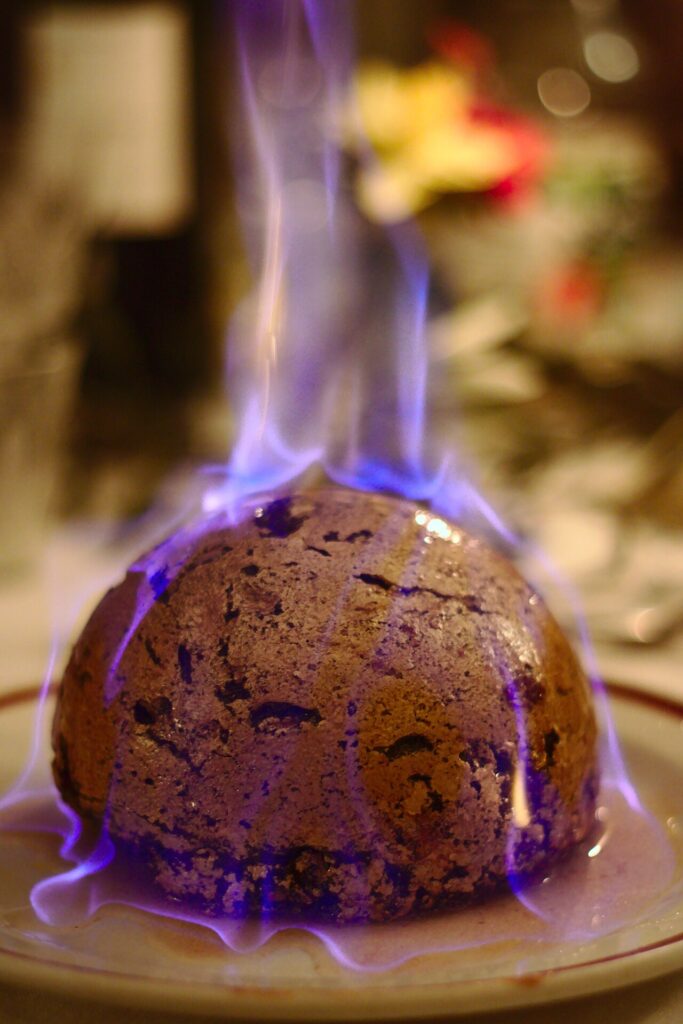
5. Christmas Pudding (United Kingdom)
Christmas pudding is a dark, dense steamed pudding of dried fruit, spices, and suet, sometimes called figgy or plum pudding. It is traditionally made weeks or even a year ahead on “Stir-up Sunday,” when each family member gives it a stir and makes a wish, and the alcohol in it helps the pudding keep. At the table it is doused in brandy and set alight, then served with brandy butter or cream. A hidden coin promises luck to whoever finds it.
6. Mince Pies (United Kingdom)
Mince pies are small pastries filled with “mincemeat,” a sweet mix of dried fruit, spices, and suet. The name is a clue to their history: they once contained real minced meat, which faded out over the centuries to leave the spiced fruit. Britons eat them by the dozen through December, and one is often left out for Father Christmas. Folklore says that eating a mince pie on each of the twelve days of Christmas brings twelve happy months.
7. Lutefisk (Norway)
Lutefisk is one of the boldest dishes on any Christmas table. Dried whitefish, usually cod, is soaked in a lye solution until it turns soft and gelatinous, then rinsed and gently cooked. The name itself means “lye fish,” and cooks must rinse it thoroughly so it is safe to eat. It is a love it or hate it tradition in Norway, Sweden, and Nordic communities in the American Midwest, served with potatoes, peas, and plenty of butter.
8. Lussekatter (Sweden)
Lussekatter are golden, S-shaped buns flavored and colored with saffron, each curl usually marked with two raisins. They are baked for Saint Lucia Day on December 13, when children in white robes carry them in a candlelit procession. The saffron glow and the candles are a small act of defiance against the long Scandinavian winter dark. The buns appear at breakfast and coffee tables across the rest of the season too.
9. Joulukinkku (Finland)
The centerpiece of a Finnish Christmas is joulukinkku, a large ham slow baked for hours and often glazed with mustard and breadcrumbs. It anchors the Christmas Eve table, served warm and then cold in the days that follow. The leftovers flavor soups and sandwiches well into the new year. Few Finnish households would consider the holiday complete without it.
10. Christmas Carp (Poland and Czechia)
In Poland and Czechia the Christmas Eve main course is freshwater carp, fried in breadcrumbs or baked. A well known quirk is that families sometimes buy the fish live and keep it in the bathtub for a day or two before cooking. Nothing goes to waste, with the rest of the fish turned into a dark, sweet soup or a jellied dish. A scale from the carp, tucked into a wallet, is said to bring money in the year ahead.
11. Turrón (Spain)
Turrón is a nougat made from honey, sugar, egg white, and toasted almonds, sold in slabs at Christmas. It comes in a hard, brittle style and a soft, chewy one, both linked to the town of Jijona in the Alicante region. Records of it in Spain reach back centuries, with deeper roots in the honey and almond sweets of the Moorish kitchen. A plate of turrón alongside polvorones and marzipan is a fixture of the Spanish holiday.
12. Melomakarona (Greece)
Melomakarona are spiced cookies soaked in honey syrup and sprinkled with crushed walnuts, their very name built from the Greek words for honey and a small cake. They appear at Christmas beside kourabiedes, crumbly almond cookies buried in powdered sugar. The two are made in big batches and offered to every guest who visits over the holidays. Many families bake both, one sticky and dark, the other pale and dry.
Latin America
In Latin America the Christmas feast is warm, communal, and often built around corn dough and slow roasted pork, eaten late on Christmas Eve after the family gathers.
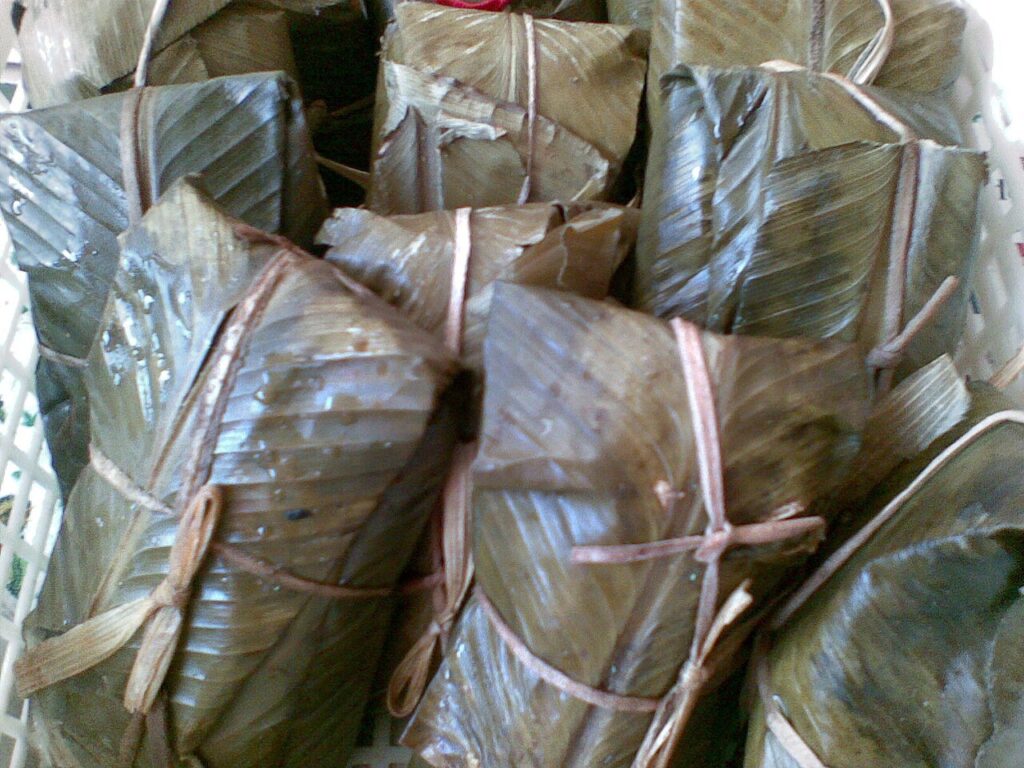
13. Tamales (Mexico)
Tamales are parcels of corn dough, or masa, filled with meat, cheese, or chilis, wrapped in corn husks and steamed. Making them at Christmas is a family event in itself, a tamalada, where relatives gather for a day to assemble hundreds at once. Each region has its own fillings, from red chili pork to sweet versions with raisins and pink dough. They are eaten on Christmas Eve and through the season, often with a cup of warm punch.
14. Hallacas (Venezuela)
The hallaca is the heart of a Venezuelan Christmas. Corn dough is spread thin, filled with a rich stew of beef, pork, chicken, olives, and capers, then wrapped in plantain leaves and boiled. Like the tamale, it is made in large family batches, with each relative assigned a step on the production line. The recipes are handed down and argued over for generations.
15. Pan de Jamón (Venezuela)
Pan de jamón is a soft, rolled bread filled with ham, green olives, and raisins, baked until golden. It first appeared in a Caracas bakery around 1905 and quickly spread across the country to become a Christmas standard. The sweet, salty, and briny filling in one slice is what makes it special. A piece alongside hallacas is the classic Venezuelan holiday plate.
16. Pan de Pascua (Chile)
Despite a name that usually points to Easter, pan de Pascua is Chile’s Christmas cake. It is a spiced, sponge like loaf full of candied fruit, nuts, and a hint of rum or honey. Its warm spices and dried fruit show the influence of German settlers in southern Chile and their love of stollen. Chileans enjoy it with a glass of cola de mono, a coffee and aguardiente drink, in the warmth of the southern summer.
17. Pernil (Puerto Rico)
Pernil is a pork shoulder marinated in garlic, oregano, and citrus, then slow roasted until the meat is tender and the skin crisp. It is the star of the Puerto Rican Christmas, served with rice and pigeon peas, and guests fight over the crackling shards of skin called cuerito. The holiday season on the island is one of the longest anywhere, and pernil features at gathering after gathering.
18. Rabanada (Brazil)
Rabanada is Brazil’s Christmas sweet, close to French toast. Slices of bread are soaked in milk and egg, fried, then rolled in sugar and cinnamon. Once a way to use up stale bread, it is now made fresh for the Christmas Eve table and eaten warm. Some cooks dress it up with a drizzle of red wine or port syrup.
Asia
Across Asia, Christmas food ranges from rice cakes sold outside dawn Masses to desserts shaped by centuries of trade and colonial history.
19. Bibingka (Philippines)
Bibingka is a soft rice flour and coconut cake, traditionally baked in clay pots lined with banana leaves, with hot coals set above and below so it cooks from both sides. It is topped with salted egg and cheese and sold piping hot from stalls outside churches during Simbang Gabi, the nine dawn Masses before Christmas. The smell of it baking is, for many Filipinos, the smell of the season.
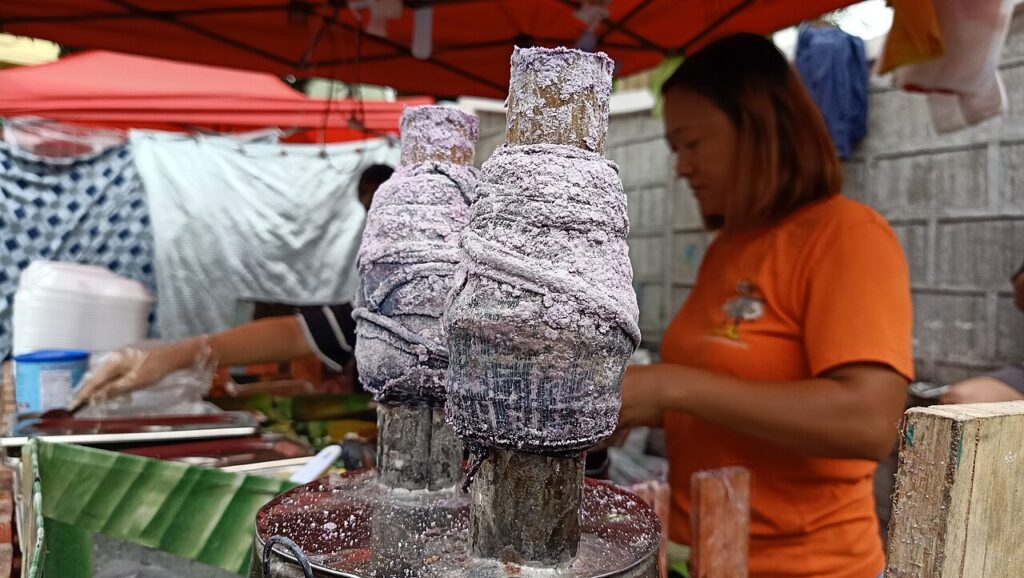
20. Puto Bumbong (Philippines)
Sold alongside bibingka, puto bumbong is a purple sticky rice treat steamed in narrow bamboo tubes. It is served with butter, grated coconut, and brown sugar. The striking violet color comes from an heirloom variety of rice called pirurutong. The dish appears only during the Christmas dawn Mass season, which makes it feel all the more special.
21. Christmas Cake (Japan)
The Japanese Christmas cake is a light sponge layered with whipped cream and fresh strawberries. Its red and white colors have made it a symbol of the holiday, which Japan celebrates as a bright, festive occasion rather than a religious one. The confectionery company Fujiya helped turn it into a national habit in the early 1900s. Families order them in advance, much as many also reserve a Christmas bucket of fried chicken.
22. Bebinca (Goa, India)
Bebinca is a rich layered dessert from Goa, where Portuguese and Indian cooking met over centuries. It is built from many thin layers of a batter of coconut milk, egg yolk, sugar, and ghee, each baked before the next is added. A good bebinca can have a dozen or more layers and take hours to make. It is served in slices at Goan Christmas tables, sometimes warm with a scoop of ice cream.
23. Breudher (Sri Lanka)
Breudher is a buttery yeast cake baked in a fluted ring mold, a legacy of Dutch rule in Sri Lanka. The Burgher community, descended from European settlers, serves it at Christmas breakfast with butter and a slice of Edam cheese. Lighter than a fruitcake, it sits somewhere between a bread and a cake. It is one of many dishes that show how Christmas food travels and adapts.
Africa
In Africa, Christmas food reflects both local staples and deep religious tradition, from a fast breaking feast in the Ethiopian highlands to a sweet Cape Dutch pudding.
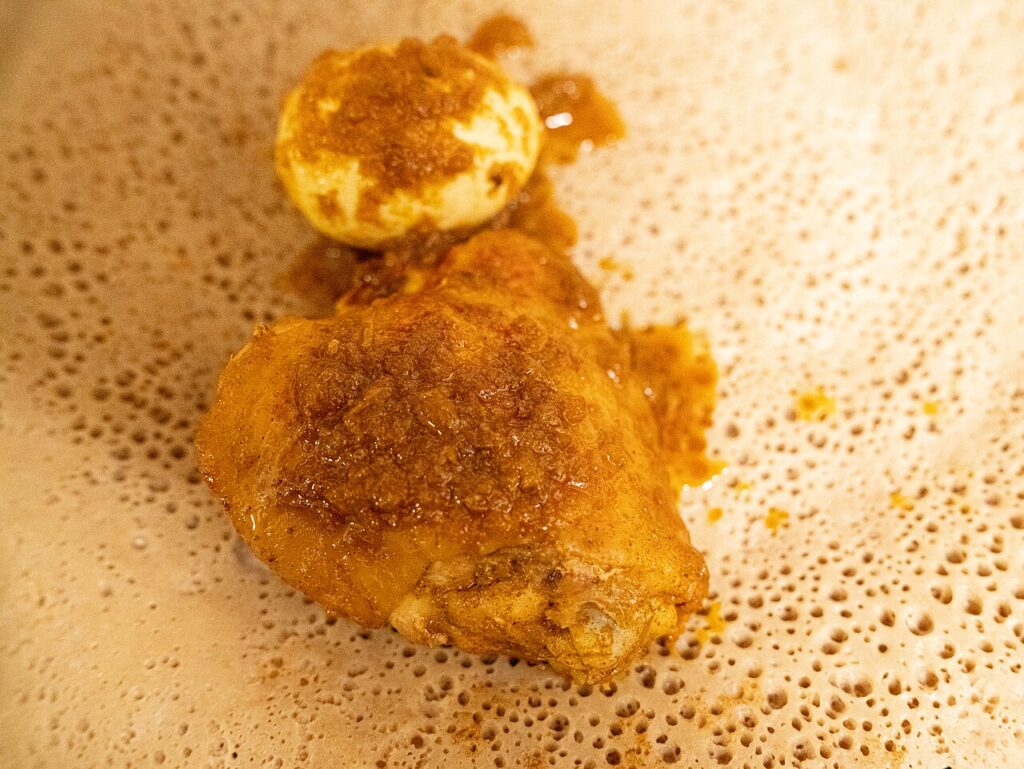
24. Doro Wat with Injera (Ethiopia)
Doro wat is a deeply spiced chicken stew, dark with berbere chili and built on a base of onions slowly cooked down with spiced butter, then simmered with hard boiled eggs. It is served on injera, a soft, slightly sour flatbread that doubles as the plate and the utensil. Ethiopians eat it to break a long fast at Genna, the Ethiopian Orthodox Christmas on January 7, when the church follows the older Julian calendar.
25. Malva Pudding (South Africa)
Malva pudding is a warm, sticky baked sponge of Cape Dutch origin, sweetened with apricot jam and soaked in a hot cream sauce after baking. It is served hot with custard or ice cream. A year round South African favorite, it also rounds off many a Christmas lunch in the southern summer. The name is thought to come from an old word linked to the sweet wine once served with it.
Festive Drinks
No Christmas table is complete without something warm or spiced in the glass. These five travel from snowy markets to tropical verandas.
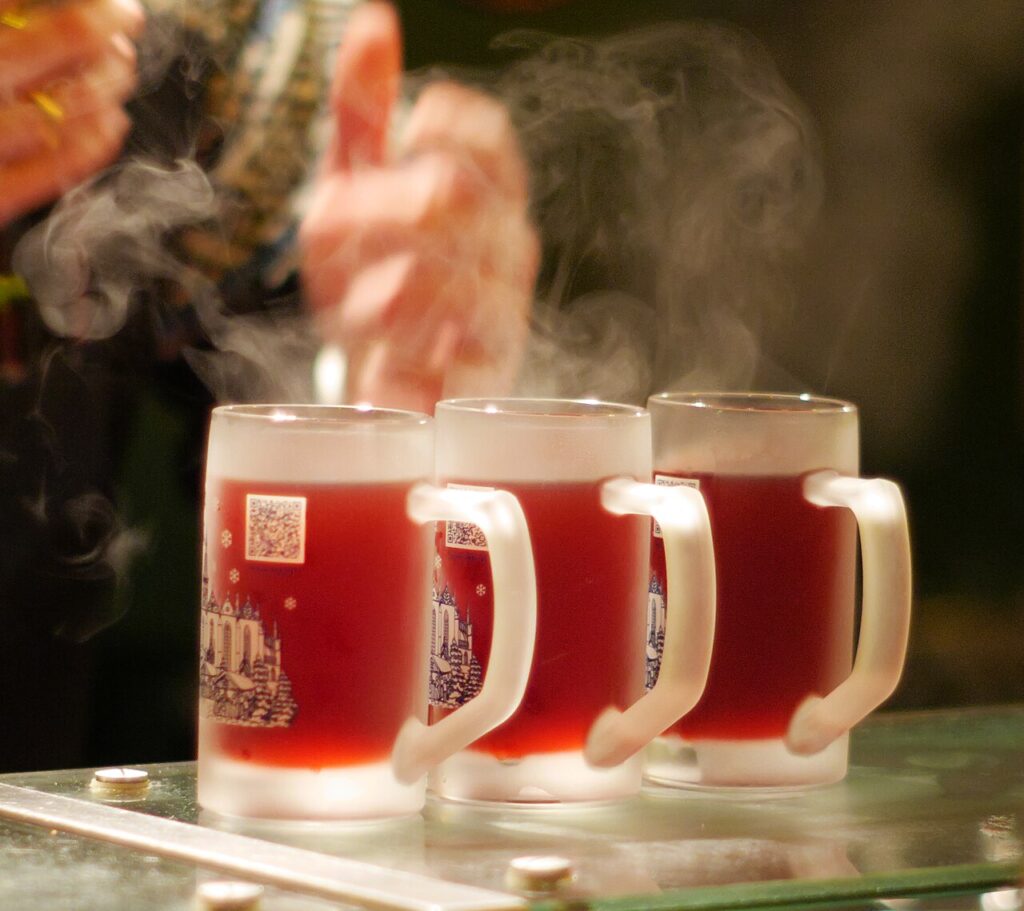
26. Mulled Wine / Glühwein (Europe)
Mulled wine, known as Glühwein in German speaking countries, is red wine gently warmed with cinnamon, cloves, star anise, citrus, and sugar. It is the signature drink of European Christmas markets, sipped from a mug to keep hands warm. The Nordic countries make a stronger version called glögg, sometimes spiked with spirits and served with raisins and almonds in the cup. Every region has its own blend of spices.
27. Eggnog (United States and United Kingdom)
Eggnog is a thick, creamy drink of milk, cream, sugar, and beaten eggs, dusted with nutmeg and often spiked with rum or brandy. It descends from a medieval English drink called posset. Recipes range from a thin, pourable version to one so thick it is almost eaten with a spoon. It became especially popular in America, where it remains a fixture of Christmas parties.
28. Ponche Navideño (Mexico)
Ponche navideño is a hot fruit punch simmered with tejocotes (a small Mexican hawthorn fruit), guava, sugar cane, cinnamon, and piloncillo. It is ladled out steaming at Las Posadas and Christmas gatherings, and an adult version adds a splash of rum or tequila. Sticks of sugar cane double as edible stirrers. The softened fruit is eaten from the bottom of the cup with a spoon.
29. Coquito (Puerto Rico)
Coquito, which means “little coconut,” is a Puerto Rican Christmas drink of coconut milk, cream, sweetened condensed milk, spices, and white rum. Often called coconut eggnog, it is traditionally made without eggs, which sets it apart from its northern cousin. Families blend it from closely guarded recipes and give it to guests in small bottles as a gift. No two batches taste quite alike.
30. Sorrel (Caribbean)
In Jamaica and across the Caribbean, sorrel is the color of Christmas. The deep red drink is steeped from the dried sepals of the roselle hibiscus, with ginger, cloves, and sugar, and sometimes a measure of rum. The same plant flavors drinks across West Africa and Latin America, where it goes by names like bissap and agua de Jamaica. Served cold over ice, it is tart, spicy, and refreshing in the tropical heat.
Christmas Eve or Christmas Day?
When the big meal happens is almost as telling as what is served. In much of Catholic Europe and Latin America, the feast falls on Christmas Eve. Families in Mexico, Venezuela, and Italy gather late on the night of the 24th, often after a church service, for the main spread. In several of these countries the Eve is kept meatless, which is why fish takes center stage: carp in Poland and Czechia, the Feast of the Seven Fishes in Italian American homes, and lutefisk in the Nordic north.
In Britain, the United States, and Germany, the heart of the meal is instead Christmas Day lunch, built around a roast. And in Ethiopia the feast waits until January 7, when doro wat breaks weeks of fasting. One holiday, but no single hour to sit down and eat. What stays the same is the gathering itself, a table crowded with family and far more food than anyone needs.
Christmas Dishes at a Glance
Here are all 30 in one place, with the country and what each one is.
| Dish | Country | Type |
|---|---|---|
| Panettone | Italy | Sweet bread |
| Stollen | Germany | Fruit bread |
| Lebkuchen | Germany | Spiced cookie |
| Bûche de Noël | France | Cake |
| Christmas pudding | United Kingdom | Steamed pudding |
| Mince pies | United Kingdom | Pastry |
| Lutefisk | Norway | Fish main |
| Lussekatter | Sweden | Saffron bun |
| Joulukinkku | Finland | Ham main |
| Christmas carp | Poland and Czechia | Fish main |
| Turrón | Spain | Nougat |
| Melomakarona | Greece | Honey cookie |
| Tamales | Mexico | Corn dough main |
| Hallacas | Venezuela | Corn dough main |
| Pan de jamón | Venezuela | Filled bread |
| Pan de Pascua | Chile | Fruit cake |
| Pernil | Puerto Rico | Roast pork |
| Rabanada | Brazil | Fried sweet |
| Bibingka | Philippines | Rice cake |
| Puto bumbong | Philippines | Rice cake |
| Christmas cake | Japan | Sponge cake |
| Bebinca | India (Goa) | Layered dessert |
| Breudher | Sri Lanka | Yeast cake |
| Doro wat with injera | Ethiopia | Stew and flatbread |
| Malva pudding | South Africa | Baked dessert |
| Mulled wine | Europe | Hot drink |
| Eggnog | US and UK | Cold drink |
| Ponche navideño | Mexico | Hot punch |
| Coquito | Puerto Rico | Cold drink |
| Sorrel | Caribbean | Cold drink |
One Holiday, a Thousand Flavors
Look across these 30 dishes and a few patterns appear. Cold countries reach for dense breads, dried fruit, and warming spice. Latin America gathers whole families around corn dough and roast pork. Former colonies carry the cakes of distant rulers, reshaped with local coconut and rice. Almost everywhere, the food is made in big batches and shared. And nearly every culture saves its sweetest, richest cooking for this one time of year, bringing out recipes that only appear when the whole family is together.
That sharing is the real tradition. The recipes change from one border to the next, but the reason for cooking them does not. To explore the customs that surround these meals, visit our guide to Christmas around the world, or return to the main Christmas guide for the full story of the season.