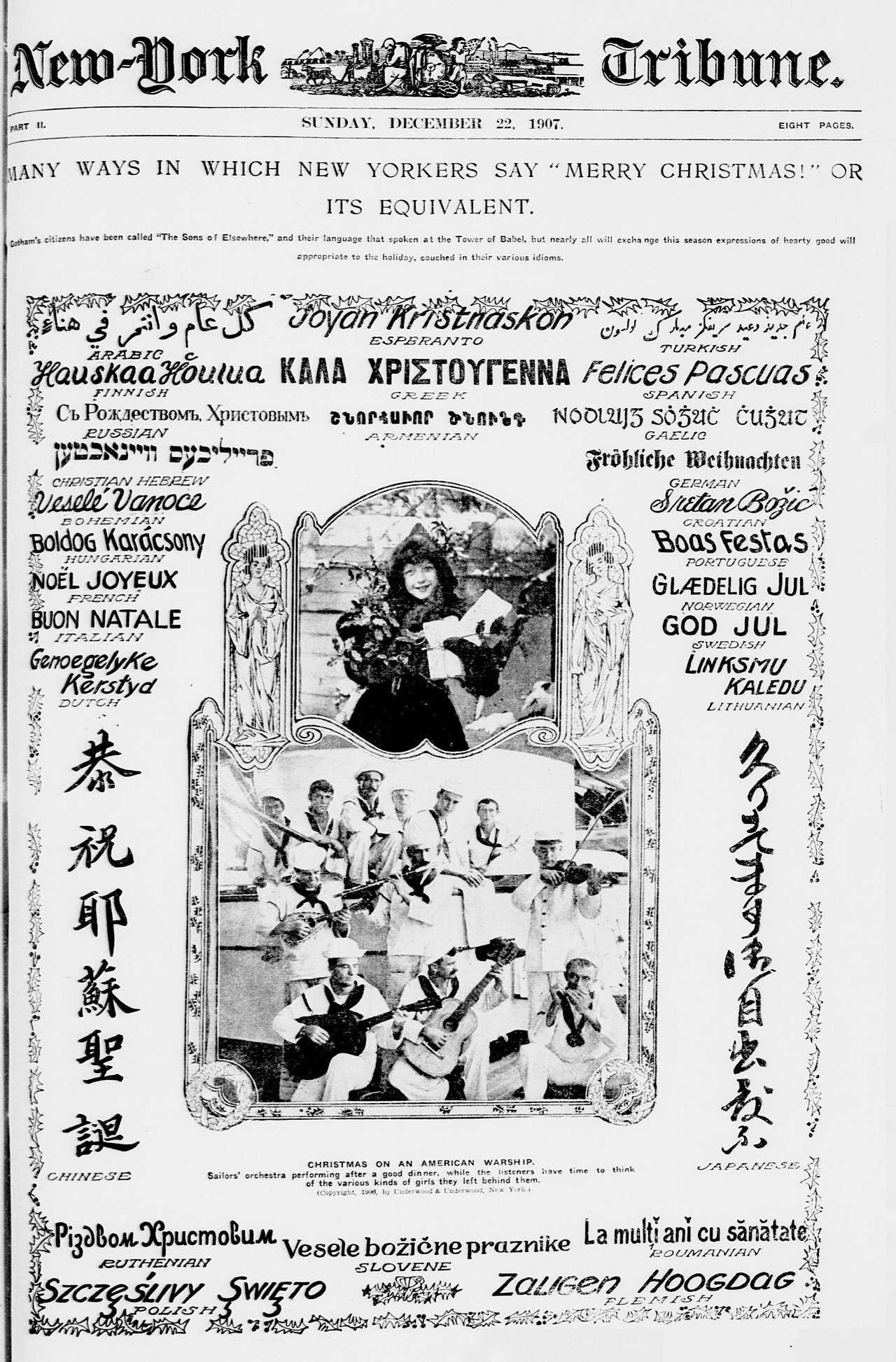
Two short words, Merry Christmas, carry a remarkable amount of warmth. Say them in a stranger’s own language and the warmth doubles. A “Feliz Navidad” to a Spanish neighbor or a “Joyeux Noël” to a French friend turns a polite nod into a real connection.
This guide shows you how to say Merry Christmas in 50 languages, with the correct spelling and a simple pronunciation guide for each. The greetings are grouped by region so you can find what you need quickly. Along the way it explains where these phrases come from, how to pronounce the tricky ones, and the small customs that go with a festive greeting around the world.
For more on the cultures behind these words, see our guide to Christmas around the world, or the full guide to Christmas.
Western Europe
These are the greetings most English speakers half recognize already, the ones that turn up on cards and in songs. Spanish and Portuguese keep the link to the Nativity in Navidad and Natal, French and Italian do the same with Noël and Natale, while German wishes you not a merry day but holy nights. Master these seven and you can greet a large share of the world. Notice how many of them share a root: the Spanish, French, Italian, and Portuguese words all grew from the same Latin source, so learning one gives you a running start on the rest.
| Language | Merry Christmas | Pronunciation |
|---|---|---|
| English | Merry Christmas | MERR-ee KRISS-muss |
| Spanish | ¡Feliz Navidad! | fey-LEESS nah-vee-DAHD |
| French | Joyeux Noël | zhwah-YUH no-EL |
| German | Frohe Weihnachten | FROH-uh VY-nakh-ten |
| Italian | Buon Natale | bwon nah-TAH-leh |
| Portuguese | Feliz Natal | feh-LEESS nah-TAHL |
| Dutch | Vrolijk Kerstfeest | VROH-luck KAIRST-fayst |
The Celtic and Regional Languages
Some of Europe’s oldest and most distinctive languages live alongside the big national tongues. The Celtic languages of Ireland, Wales, and Scotland have their own beautiful Christmas greetings, and in Spain the regional languages of Catalonia and the Basque Country wish each other well in words that look nothing like Spanish. These greetings are a point of real pride for their speakers.
| Language | Merry Christmas | Pronunciation |
|---|---|---|
| Irish | Nollaig Shona Duit | NULL-ig HUN-uh dit |
| Welsh | Nadolig Llawen | na-DOL-ig HLAH-wen |
| Scottish Gaelic | Nollaig Chridheil | NOL-ick CHREE-al |
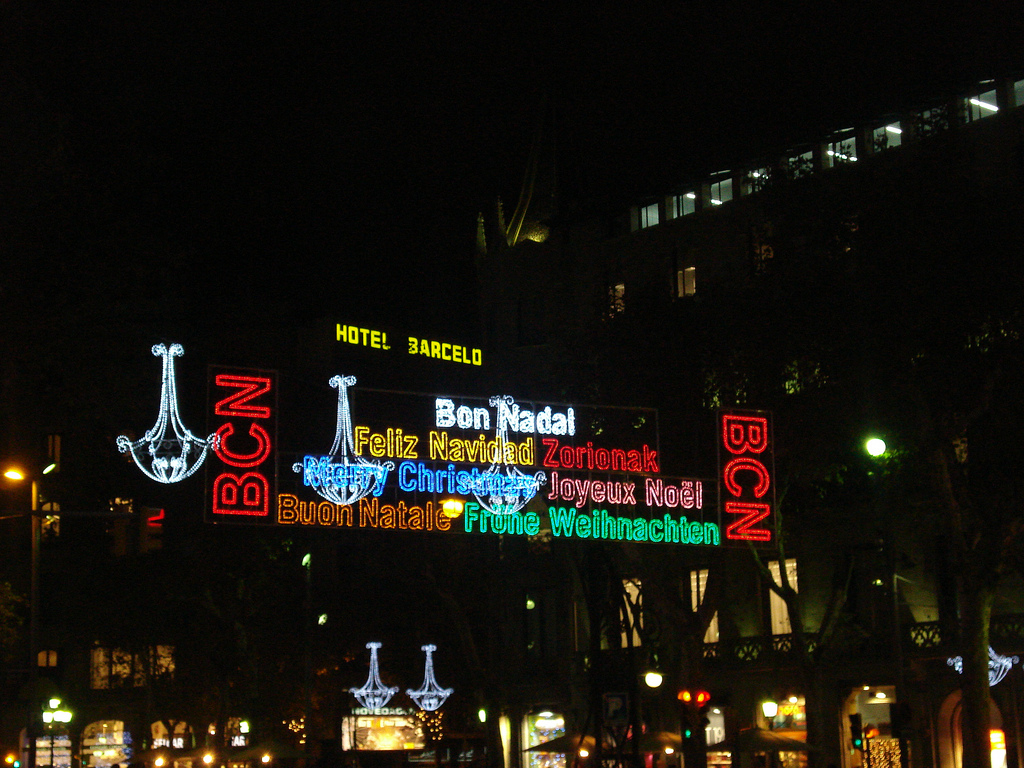
| Catalan | Bon Nadal | bon nuh-DAHL |
| Basque | Eguberri on | eh-goo-BERR-ee on |
The Nordic Countries
In the far north, where winter is darkest and the festival oldest, the greeting often reaches back to a word older than Christmas itself. The Scandinavian “God Jul” literally means “Good Yule,” a nod to the midwinter feast that Christmas grew out of. Finnish, which is unrelated to its neighbors, goes its own way entirely.
| Language | Merry Christmas | Pronunciation |
|---|---|---|
| Swedish | God Jul | good YOOL |
| Danish | Glædelig Jul | GLAY-the-li YOOL |
| Norwegian | God Jul | good YOOL |
| Finnish | Hyvää Joulua | HUU-vaa YOH-loo-ah |
| Icelandic | Gleðileg jól | GLEH-thi-leg YOHL |
Central and Southeastern Europe
From Poland down to Greece, the greetings carry the marks of long winters and strong religious tradition. Many wish you “merry” or “happy” feast days, and the spelling is rich with accents and special letters. In several of these countries the greeting is exchanged at a late Christmas Eve supper rather than on Christmas Day. Take care with the diacritics here, since a single accent can change a sound completely.
| Language | Merry Christmas | Pronunciation |
|---|---|---|
| Polish | Wesołych Świąt | veh-SOH-wikh SHVYONT |
| Czech | Veselé Vánoce | VEH-seh-leh VAH-no-tseh |
| Hungarian | Boldog Karácsonyt | BOL-dog KAH-rah-chont |
| Romanian | Crăciun Fericit | kruh-CHOON feh-ree-CHEET |
| Croatian | Sretan Božić | SREH-tahn BOH-zheech |
| Serbian | Срећан Божић (Srećan Božić) | SREH-chahn BOH-zheech |
| Bulgarian | Весела Коледа (Vesela Koleda) | veh-SEH-lah KOH-leh-dah |
| Greek | Καλά Χριστούγεννα (Kalá Christoúgenna) | kah-LAH khrees-TOO-yeh-nah |
| Albanian | Gëzuar Krishtlindjet | guh-ZOO-ar krisht-LEEN-dyet |
Eastern Europe and the Baltic
Further east, the Slavic and Baltic languages bring new alphabets and new sounds. Russian and Ukrainian use the Cyrillic script, and their greetings often point to the Nativity itself, the Rozhdestvo. The Baltic languages of Lithuania, Latvia, and Estonia are small but ancient, and their greetings are full of soft, rolling sounds.
| Language | Merry Christmas | Pronunciation |
|---|---|---|
| Russian | Счастливого Рождества (Schastlivogo Rozhdestva) | shchas-LEE-vuh-vuh razh-dist-VAH |
| Ukrainian | Веселого Різдва (Veseloho Rizdva) | veh-SEH-loh-ho reezd-VAH |
| Lithuanian | Linksmų Kalėdų | LEENK-smoo kah-LEH-doo |
| Latvian | Priecīgus Ziemassvētkus | pree-EH-tsee-gus ZEE-mas-svet-kus |
| Estonian | Häid jõule | HIGH-id YOH-uh-leh |
The Middle East and Africa
Christmas is celebrated by communities right across the Middle East and Africa, in some of the oldest Christian lands on earth. Here you will find the Arabic and Hebrew scripts, written from right to left, alongside the languages of East and Southern Africa. Ethiopia’s Amharic greeting wishes a happy Genna, the name of the Ethiopian Christmas. Some of these greetings are written in scripts that run from right to left, and others belong to languages spoken by millions yet rarely printed on a Christmas card, which is part of what makes them worth learning.
| Language | Merry Christmas | Pronunciation |
|---|---|---|
| Arabic | عيد ميلاد مجيد (ʿid milad majid) | eed mee-LAAD ma-JEED |
| Hebrew | חג מולד שמח (Chag molad sameach) | khag moh-LAHD sah-MEH-akh |
| Turkish | Mutlu Noeller | moot-LOO no-el-LER |
| Swahili | Krismasi Njema | kris-MAH-see n-JEH-mah |
| Amharic | መልካም ገና (Melkam Gena) | mel-KAHM GEH-nah |
| Afrikaans | Geseënde Kersfees | kheh-SEH-un-duh KAIRS-fays |
| Zulu | UKhisimusi oMuhle | oo-khee-see-MOO-see oh-MOO-shleh |
Asia
Across Asia, Christmas may be a minority festival or a purely festive import, but the greetings are everywhere in December. Some languages borrow the English words directly, like the Japanese “Merii Kurisumasu.” Others build their own phrase, like the Mandarin Chinese greeting, which is made of characters meaning “holy birth” and “happy.” India, the Philippines, and Indonesia, each home to large Christian communities, have warm greetings of their own, while in Thailand and Vietnam the phrase is mostly a friendly, festive one.
| Language | Merry Christmas | Pronunciation |
|---|---|---|
| Mandarin Chinese | 圣诞快乐 (shèngdàn kuàilè) | shung-DAN kwai-luh |
| Japanese | メリークリスマス (Merī Kurisumasu) | meh-REE koo-ree-soo-mah-soo |
| Korean | 메리 크리스마스 (Meri Keuriseumaseu) | meh-ree keu-ree-seu-ma-seu |
| Thai | สุขสันต์วันคริสต์มาส (Suksan wan Christmas) | sook-SAN wan krit-MAHT |
| Vietnamese | Chúc mừng Giáng sinh | chook mung zaang sing |
| Hindi | शुभ क्रिसमस (Shubh Krismas) | shoobh KRIS-mus |
| Tagalog | Maligayang Pasko | mah-lee-GAH-yang PAHS-koh |
| Indonesian | Selamat Hari Natal | seh-LAH-mat HAH-ree NAH-tal |
The Pacific and Beyond
Finally, a handful of greetings from the Pacific islands and from the classical and constructed languages. The Hawaiian “Mele Kalikimaka” is a favorite, a reshaping of the English words to fit a language with a very different set of sounds. Latin and Esperanto round out the list for the curious.
| Language | Merry Christmas | Pronunciation |
|---|---|---|
| Hawaiian | Mele Kalikimaka | MEH-leh kah-LEE-kee-MAH-kah |
| Maori | Meri Kirihimete | MEH-ree kee-ree-hee-MEH-teh |
| Latin | Felix Natalis | FEH-leeks nah-TAH-liss |
| Esperanto | Feliĉan Kristnaskon | feh-LEE-chahn krist-NAHS-kon |
A Closer Look at the World’s Favorite Greetings
A handful of these greetings travel far beyond their home countries. They turn up in songs, on cards, and in films, and they are worth knowing a little more deeply.
Feliz Navidad may be the most famous Christmas greeting in the world after the English one, helped along by José Feliciano’s 1970 song of the same name, which mixes the Spanish phrase with English and is now a global standard. Spanish speakers use it warmly and often, frequently pairing it with y Próspero Año Nuevo, “and a prosperous New Year.” The same phrase, with only small changes, works across the whole Spanish speaking world, from Spain to Argentina.
Joyeux Noël carries the soft music of French. It is used in France, Belgium, Switzerland, parts of Canada, and across French speaking Africa. The single word Noël has even entered English as a name and as a poetic word for Christmas, as in the carol “The First Noel.”
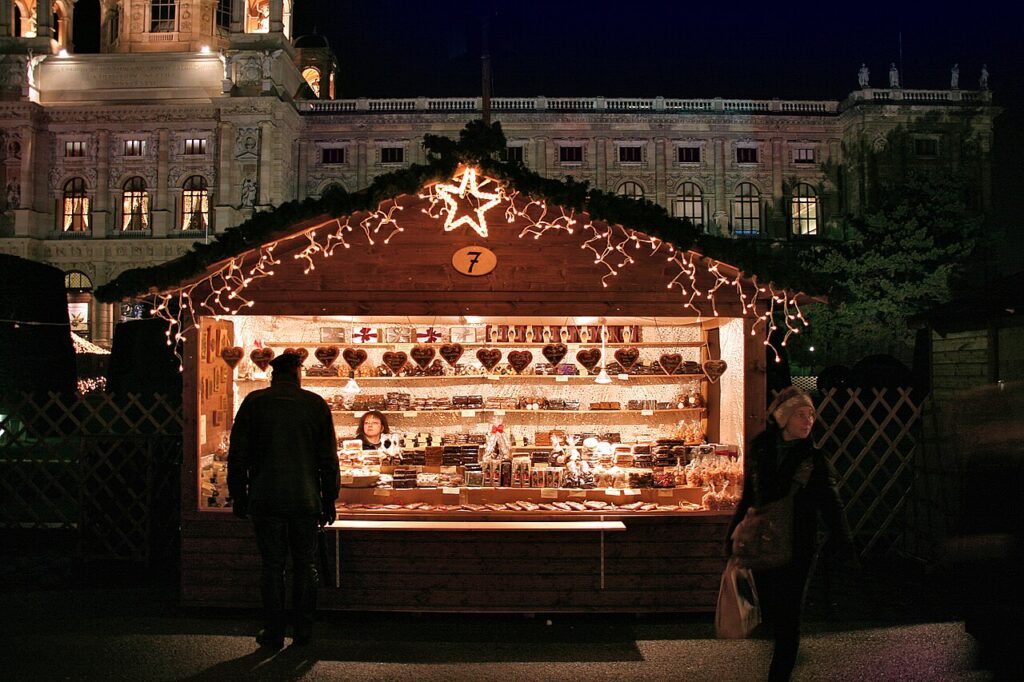
Frohe Weihnachten is the standard German wish, heard from Germany to Austria to Switzerland. Germans also use the longer Fröhliche Weihnachten, and at the country’s famous Christmas markets the words appear on signs above stalls of mulled wine and gingerbread. The plural Weihnachten, the “holy nights,” is a reminder that the German Christmas has long centered on Christmas Eve.
Buon Natale rings out across Italy through a long season that stretches to Epiphany on January 6. It pairs naturally with Buone Feste, “happy holidays,” to cover the whole stretch of celebration, and the word Natale is also a common Italian first name.
God Jul unites the Nordic countries, said in Sweden, Norway, and Denmark with only small differences in spelling. Short and ancient, it wishes not a merry Christmas but a “good Yule,” a phrase that would have been understood a thousand years ago. Across much of Asia, by contrast, many greetings simply borrow the English words, so a Japanese “Merii Kurisumasu” or a Korean “Meri Keuriseumaseu” is really “Merry Christmas” wearing new clothes.
Where the Greetings Come From
Look closely and the world’s Christmas greetings fall into a few families, each telling a small piece of history.
The largest family points to the birth. The Latin phrase dies natalis, the “day of birth,” gave Romance Europe its words for Christmas: the French Noël, the Italian Natale, the Spanish Navidad, the Portuguese Natal, and the Catalan Nadal. The same idea, the birth, sits inside the Welsh Nadolig and the Irish Nollaig, both shaped by Latin, and inside the Greek Christougenna, literally “Christ” plus “birth.” Even the Chinese greeting is built from characters meaning “holy birth.”
A second family looks to Yule, the old Germanic midwinter feast. The Scandinavian God Jul and the related jol of Iceland all carry that ancient word, a reminder that the northern Christmas was layered over an older winter festival. The German Weihnachten takes yet another path, meaning the “holy nights.” And the English word Christmas itself comes from “Christ’s Mass,” the church service that gave the day its name. One holiday, but its names remember three different things: a birth, a feast, and a Mass.
Greetings From the Same Family
If fifty greetings feel like a lot to learn, it helps to know that many of them are cousins. Spot the family and you can almost guess the rest.
The biggest group is the birth family, all descended from the Latin word for birth. Once you know the French Noël, the Italian Natale, the Spanish Navidad, the Portuguese Natal, and the Catalan Nadal all fall into place, and even the Welsh Nadolig and the Irish Nollaig echo the same idea.
The Yule family covers the north. The Swedish, Norwegian, and Danish greetings all end in some form of Jul, and the Icelandic jól is the same old word. Learn one and you nearly have the others.
A third group is Slavic. Across Croatia, Serbia, and Slovenia the word Božić, a tender name for the Christ child, appears again and again, while Bulgarian leans on Koleda and Russian on Rozhdestvo, the Nativity. And finally there is the youngest family of all, the borrowed English greetings of the Pacific and East Asia, where “Merry Christmas” has been reshaped into Mele Kalikimaka, Meri Kirihimete, and Merii Kurisumasu. Hearing the family in a greeting is half the fun of learning it.
How to Pronounce These Greetings
A pronunciation guide can only get you so far, but a few pointers help. In the Romance languages, vowels are pure and clear, and stress usually falls near the end, so Feliz Navidad is “fey-LEES nah-vee-DAHD.” French keeps things soft and drops many final consonants, so Joyeux Noël is “zhwa-YUH no-EL.”
German and the Nordic languages are spoken more firmly, with the German ch a soft sound made at the back of the throat. The Slavic languages pile up consonants that look harder than they sound once you slow down, and the accents in Polish, Czech, and Hungarian are guides, not decorations. For the non-Latin scripts, lean on the romanization in brackets and do not worry about perfection. Native speakers are almost always delighted that you tried at all.
Choosing and Using a Greeting
Knowing the words is one thing. Using them well is another, and a few simple guidelines help.
Match the moment. In countries where Christmas is the main winter holiday, a Christmas greeting is welcome everywhere. In places where it is a minority festival, or where people mark different holidays, a neutral phrase like “Happy Holidays” or “Season’s Greetings” is a warmer choice, as is a simple “Happy New Year,” which nearly everyone shares. When in doubt, a friendly New Year wish rarely goes wrong.
Mind the formality. Most of the greetings in this guide are warm and everyday, fine for friends, neighbors, and shopkeepers. In a formal letter or card, some languages prefer a fuller phrase, such as the German Fröhliche Weihnachten und ein gutes neues Jahr, wishing both a merry Christmas and a good new year.
Write it down. A greeting in someone’s own language means even more on paper. If you are sending a card abroad, copying the phrase carefully, accents and all, is a small kindness that lands. For the non-Latin scripts, even a romanized version shows the thought.
Do not fear mistakes. The single most important rule is to try. A clumsy Joyeux Noël or a halting Feliz Navidad almost always earns a smile rather than a correction. The effort is the gift. People hear in it that you noticed where they come from, which is the whole point of a greeting in the first place.
Greetings With a Story
A few greetings carry a story worth knowing.
- Hawaiian, Mele Kalikimaka: this is simply “Merry Christmas” reshaped to fit the Hawaiian language, which has no R or S sound and ends its syllables in vowels. The two English words stretched into five Hawaiian syllables.
- French, Noël: the word comes straight from the Latin natalis, meaning “of birth.” The same root gives the Italian Natale, the Spanish Navidad, and the Portuguese Natal.
- Swedish and Norwegian, God Jul: this means “Good Yule,” keeping alive the name of the old Norse midwinter feast rather than any word for Christ.
- Mandarin Chinese, 圣诞快乐: the first two characters mean “holy birth,” a neat description of the Nativity rather than a borrowed name.
- Serbian, Hristos se rodi: the traditional religious greeting means “Christ is born,” and the set reply is “Truly he is born.”
- Basque, Eguberri on: this older greeting literally means “good new day,” echoing an ancient solstice idea from one of Europe’s oldest languages.
- Amharic, Melkam Gena: “Gena” is the Ethiopian name for Christmas, celebrated on January 7, and also the name of a hockey like game said to have been played by the shepherds.
- Arabic, ʿid milad majid: this means “glorious birth feast,” built on the same word for birth used in an everyday happy birthday wish.
When Do People Say Merry Christmas?
The timing of a greeting varies as much as the words. In Britain and the United States, “Merry Christmas” is mostly saved for the days right around December 25. In much of Europe and Latin America, the wish is exchanged through a longer season, from the start of Advent in late November all the way to Epiphany on January 6.
The big moment also differs. Where the main celebration falls on Christmas Eve, as in Germany, Poland, and much of Latin America, the warmest greetings are shared on the night of the 24th, often around the family table. Where Christmas Day is the center, as in Britain, the greeting belongs to the morning of the 25th. And in Orthodox countries that keep Christmas in January, the season opens with a special exchange: one person says “Christ is born,” and the other answers “Truly he is born.” However the calendar runs, the greeting marks the high point of the season, the moment when people stop to wish each other well.
Other Festive Phrases
Once you can wish someone a Merry Christmas, a few more phrases round out the season. “Happy New Year” follows close behind, and many cultures pair the two, as in the Spanish Feliz Navidad y Próspero Año Nuevo. Where a single greeting needs to cover many faiths, English speakers often reach for “Happy Holidays” or “Season’s Greetings,” and other languages have their own neutral versions.
| Language | Happy New Year | Pronunciation |
|---|---|---|
| Spanish | ¡Próspero Año Nuevo! | PROS-peh-roh AH-nyoh NWEH-voh |
| French | Bonne Année | bun ah-NAY |
| German | Frohes neues Jahr | FROH-es NOY-es YAR |
| Italian | Felice Anno Nuovo | feh-LEE-cheh AH-noh NWOH-voh |
| Portuguese | Feliz Ano Novo | feh-LEESS AH-noo NOH-voo |
| Russian | С Новым годом (S Novym godom) | s NOH-vim GOH-dum |
| Mandarin Chinese | 新年快乐 (xīnnián kuàilè) | sheen-nyen kwai-luh |
| Japanese | 明けましておめでとう (Akemashite omedetō) | ah-keh-MASH-teh oh-meh-deh-TOH |
Greeting Customs Around the World
A greeting is more than words. In much of Latin America and southern Europe, a Christmas greeting comes with a warm embrace or a kiss on the cheek, often more than one. In other places a firm handshake and a smile are enough. Across the Spanish speaking world, people wish each other Felices Fiestas, “Happy Holidays,” to cover the whole stretch from Christmas to the Three Kings in January.

Written greetings have their own customs. The Christmas card, a Victorian invention, carries these phrases between friends who live far apart. In many countries it is good manners to greet not just on the day itself but throughout the season, and in Orthodox lands the greeting “Christ is born” is answered with “Glorify him.” However you say it, the point is the same everywhere: to wish another person well at the turning of the year.
In some cultures the greeting comes with a gift of food or a small token, in others with a song. Carolers going door to door, a tradition from Britain to the Philippines to Eastern Europe, are really delivering a sung greeting, and the householder often answers with a warm word and something to eat or drink. The words and the warmth travel together.
One Wish in Many Voices
Fifty greetings, fifty ways of saying the same kind thing. Some reach back to an ancient feast, some to the birth at the center of the holiday, and some are simply the English words made to fit a new mouth. Learning even one or two is a small act of welcome, a way of meeting other people where they are.
So pick a greeting from the list, practice it once or twice, and try it out this December. To explore the traditions behind these words, visit our guide to Christmas around the world, or return to the main Christmas guide.