Strip away the gifts, the lights, and the feasting, and Christmas began as one thing: a religious festival marking the birth of Jesus Christ. For roughly a third of the world’s people, that meaning still sits at the center of the season.
This guide explains the religious side of Christmas with care and accuracy. It walks through the Nativity story as the Gospels actually tell it, the people in that story, the meaning of the season of Advent, the Twelve Days of Christmas, and Epiphany, and it shows how Catholic, Protestant, and Orthodox Christians mark the feast in their own ways, including why some celebrate on January 7.
For the broader picture of the holiday, see our complete guide to Christmas, and for how the festival developed over time, our history of Christmas.
The Nativity: The Story at the Center
The Christmas story, known as the Nativity, is the account of the birth of Jesus. It is told in only two of the four Gospels, Matthew and Luke, and each highlights different details. Mark and John do not describe the birth at all. The familiar manger scene is really the two accounts blended into one.
Before Bethlehem: The Annunciation
Luke’s account actually opens months earlier, in Nazareth. The angel Gabriel appears to a young woman named Mary and tells her she will bear a son by the power of God and name him Jesus. Her reply, “let it be to me according to your word,” is remembered as the moment she freely accepts her part in the story. This scene is called the Annunciation.
Mary then visits her older relative Elizabeth, who is herself expecting a child, John the Baptist. Elizabeth greets her with words that later became part of a famous prayer, and Mary answers with a song of praise known as the Magnificat, which celebrates a God who lifts up the lowly and humbles the proud. Long before Bethlehem, Luke sets the tone of the whole Christmas message.
What Luke Tells Us
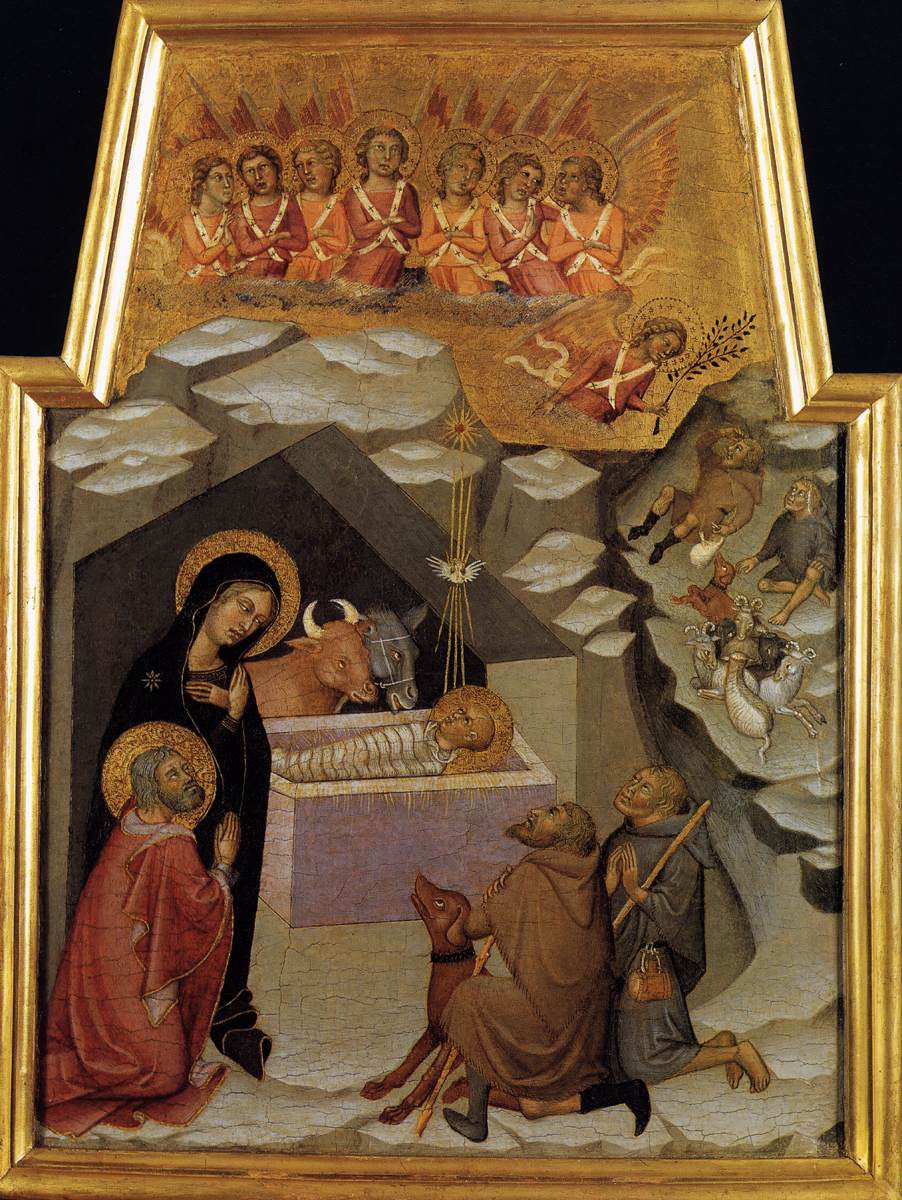
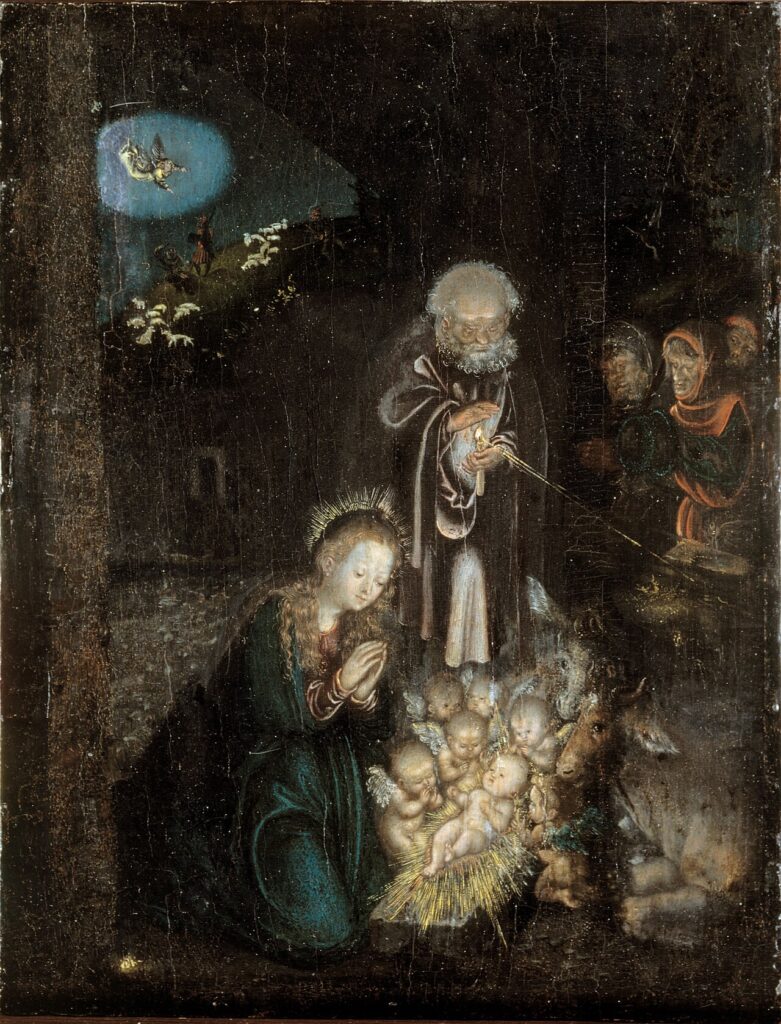
Luke gives us the scene most people picture. Mary and Joseph travel from Nazareth to Bethlehem to take part in a Roman census. Bethlehem matters here: it is the town of King David, and a birth there connects Jesus to an ancient prophecy that a ruler would come from David’s line. Finding no room in the inn, the couple shelter among the animals, and the child is born and laid in a manger, a feeding trough.
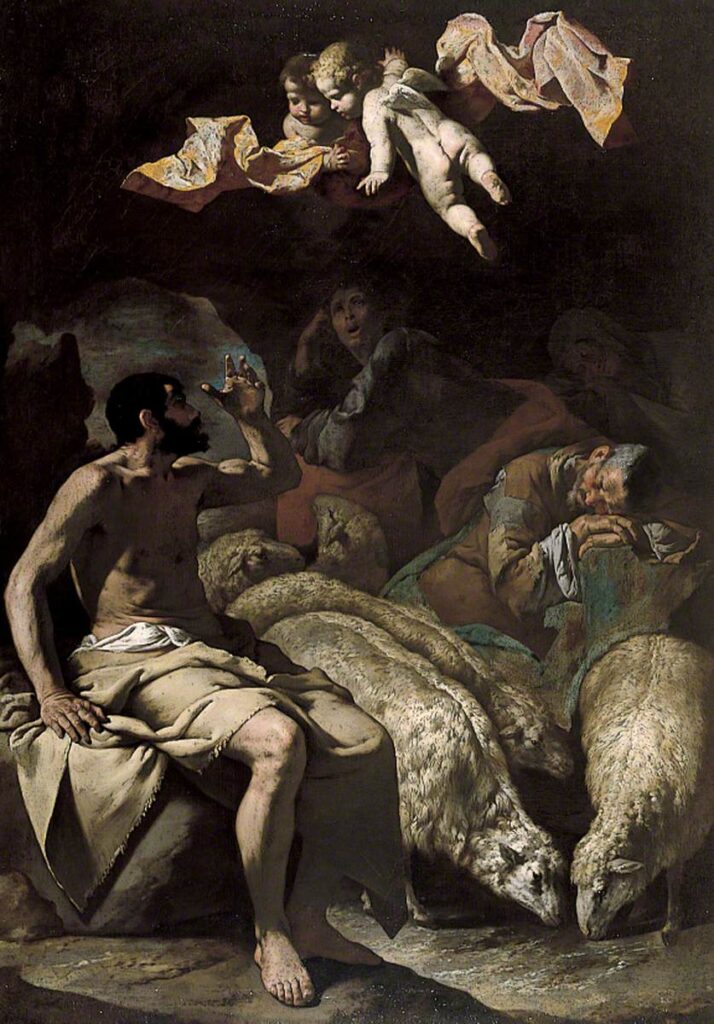
Then comes the announcement. An angel appears to shepherds watching their flocks by night, telling them of good news of great joy, and a host of angels praises God. That the news comes first to shepherds, among the lowest workers of the day, is part of the point of Luke’s telling. The shepherds hurry to find the baby and become the first to spread the word.
What Matthew Adds
Matthew tells a different part of the story. Magi from the East, often called wise men, follow a star to Judea in search of a newborn king. They visit King Herod, who is troubled by the news, then find the child and present three gifts. Each gift has long been read as a sign: gold for a king, frankincense, an incense used in worship, for his divinity, and myrrh, used to anoint the dead, as a quiet hint of his death to come.
Warned in a dream, the Magi avoid Herod on their way home. Herod, threatened by talk of a new king, orders the killing of the young boys of Bethlehem, and an angel warns Joseph to take Mary and the child to safety in Egypt. Matthew presents each step as the fulfillment of older prophecy, tying the new story to the long history of Israel.
What Came From Tradition, Not the Text
Many familiar details are later tradition rather than scripture, and it is worth being clear about the difference.
- The Bible never says how many Magi there were. The popular number three comes from the three gifts. The Gospel does not call them kings, and the names Caspar, Melchior, and Balthasar were added in the Middle Ages.
- The ox and donkey beside the manger do not appear in the Gospel accounts. They entered the scene through later tradition, drawing on a line from the prophet Isaiah.
- The shepherds and the Magi are often shown together at the manger, but in the Gospels they belong to two separate accounts, and the Magi may have arrived much later.
Key Figures in the Christmas Story
The Nativity is crowded with characters, and each carries meaning in Christian tradition. Knowing who they are makes the story easier to read.
- Mary, the mother of Jesus, is honored above all the others. In Catholic and Orthodox tradition she is called the Theotokos, a Greek title meaning “God-bearer.” Her willing “yes” to the angel at the Annunciation is seen as the moment the story begins.
- Joseph, her husband, is the quiet guardian of the family. In Matthew he is guided again and again by dreams, and it is he who leads the escape to Egypt.
- The shepherds stand for the poor and the ordinary, the first to be told and the first to believe.
- The Magi stand for the wider world beyond Israel, learned foreigners who travel far to honor the child. Their visit is read as a sign that the message is meant for everyone.
- The angels carry the announcement from heaven, and Herod represents worldly power threatened by the news of a different kind of king.
Why December 25?
The Bible gives no date for the birth of Jesus, and the year itself is uncertain. December 25 took hold only in the 4th century. Some scholars believe the date was chosen to align the feast with existing Roman sun and winter festivals, while others point to an early Christian calculation tied to the date of the crucifixion. Both ideas are taken seriously. Our history of Christmas looks at this question in detail.
The Meaning Behind the Birth: The Incarnation
For Christians, the importance of Christmas is not the scenery of the stable. It is a single, central belief called the Incarnation: that in Jesus, God became human and entered the world as a child. In traditional terms, Jesus is held to be at once fully God and fully human.
The names given to the child carry the same meaning. Jesus comes from a Hebrew name meaning “the Lord saves,” and Matthew explains he is so called because he will save his people. Christ is not a surname but a title, the Greek word for “anointed one,” matching the Hebrew Messiah. Older prophecy had promised such a figure under names like Prince of Peace, and Christians read the birth in Bethlehem as their fulfillment.
Two phrases from the Bible carry this idea. The first is the name Emmanuel, which Matthew explains means “God with us.” The second comes from the opening of John’s Gospel, “the Word became flesh and dwelt among us,” a verse traditionally read at Christmas services. Together they express why believers call the birth holy. The infant in the manger is understood as God choosing to share human life, from its most fragile beginning onward.
This is why the humble setting matters so much in the story. A king born not in a palace but in a stable, announced first to lowly shepherds, is at the heart of the festival’s meaning: that grace arrives quietly and reaches everyone, the poor shepherd and the foreign scholar alike.
One image runs through the whole season: light. The Gospels call Christ the light that shines in the darkness, and the feast falls at the darkest point of the northern year. The candle on the Advent wreath, the star over Bethlehem, and the lights in the window all echo the same idea, that a small light has come into a dark world and cannot be put out.
Advent: The Season of Waiting
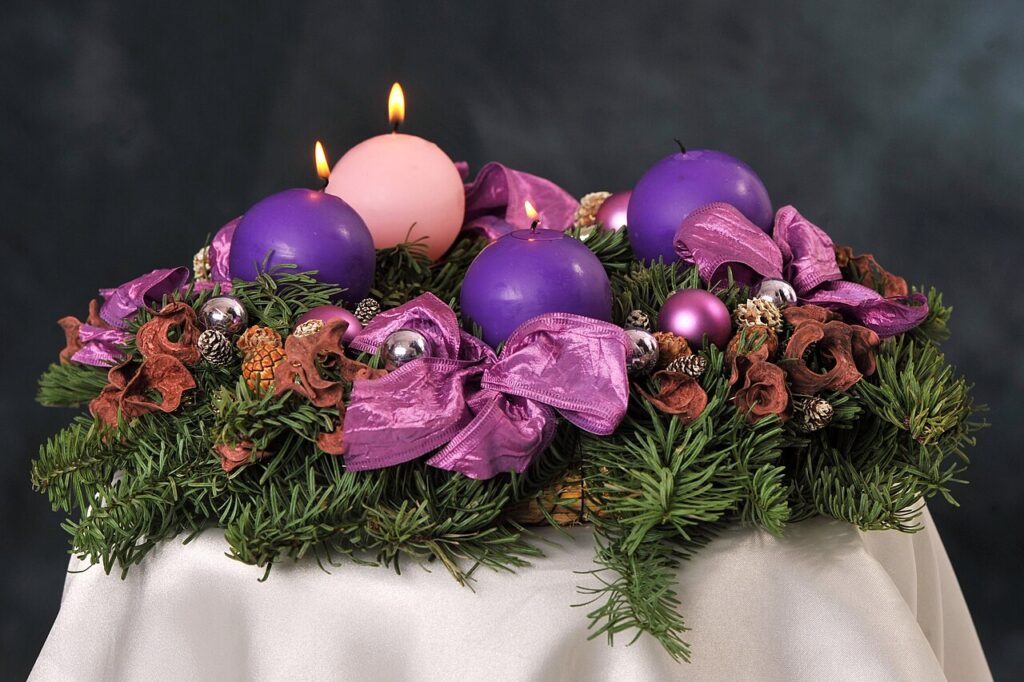
Christmas does not begin on December 25 for the church. It is preceded by Advent, a season of preparation. The word comes from the Latin adventus, meaning “coming” or “arrival.” Advent begins on the fourth Sunday before Christmas and looks in two directions at once: back to the first coming of Christ at the Nativity, and onward to his promised return.
The best known symbol of the season is the Advent wreath, a ring of greenery holding four candles, one lit on each Sunday of Advent so the light grows week by week. In the common arrangement, three candles are purple and one is rose or pink. The rose candle is lit on the third Sunday, called Gaudete Sunday, a note of joy in the middle of a reflective season. Many wreaths add a white Christ candle in the center, lit on Christmas Day itself. The four candles are often given themes such as hope, peace, joy, and love.
The colors carry meaning too. Purple, the traditional color of Advent in Western churches, stands for penance and preparation, the same color used in Lent before Easter. For this reason Advent is sometimes called a “little Lent,” and some traditions keep it as a time of fasting and reflection. Some churches now use blue instead, to set the hopeful waiting of Advent apart from the sorrow of Lent. The familiar Advent calendar, which counts down the days of December with a small door or treat for each, grew out of this season among German Lutherans in the 1800s.
The Twelve Days of Christmas
The famous Twelve Days of Christmas are not a countdown before the holiday. They are a season that begins on Christmas Day. The twelve days run from December 25 to January 5, the eve of Epiphany. Far from ending on the 25th, the church’s celebration of Christmas, called Christmastide, is only just starting.
Several feast days fall within the season. December 26 is the feast of Saint Stephen, the first Christian martyr, the day named in the carol “Good King Wenceslas” and marked in many countries as Boxing Day. December 27 honors Saint John the Evangelist, December 28 remembers the young boys killed by Herod, and January 1 marks the octave of Christmas. For much of Christian history these twelve days, not the weeks before, were the real time of feasting and celebration.
The old carol that counts gifts from a true love on each of the twelve days reflects this longer season. A popular story claims the song was once a coded catechism for persecuted Catholics, though most historians regard that as a charming but unproven legend.
Epiphany and the Three Kings
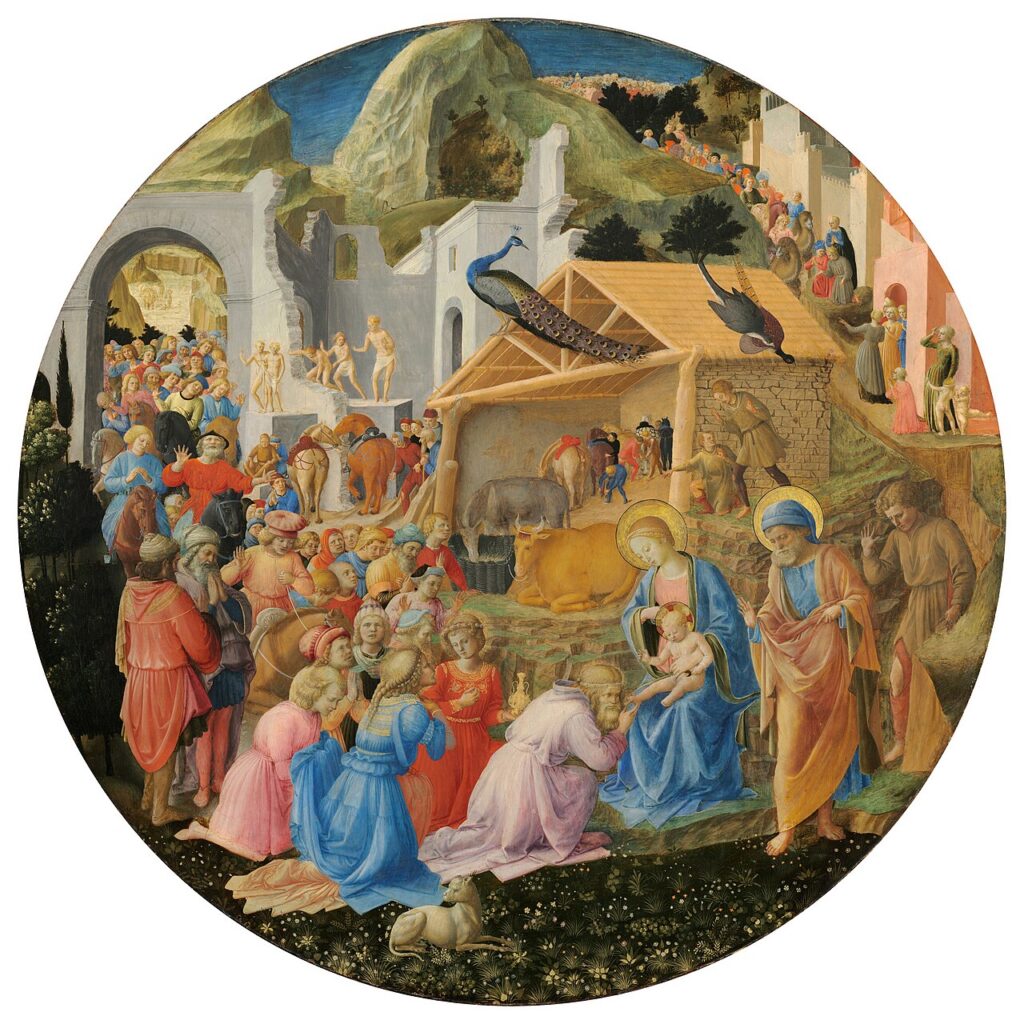
The twelve days end at Epiphany on January 6. The word means “manifestation” or “showing,” and the feast celebrates the revealing of Christ to the world. Here the Western and Eastern churches emphasize different events.
In the Western church, Epiphany remembers the visit of the Magi, understood as the moment Christ was shown to the wider world beyond the people of Israel. This is why, in Spain and across Latin America, the Three Kings, not Santa, are the great gift bringers, arriving on the eve of January 6. Families share a ring shaped king cake, and in many countries children leave out their shoes for the kings to fill. You can meet these figures and their many cousins in our guide to Santa Claus and the world’s gift-bringers.
In the Eastern church, the same feast, often called Theophany, centers instead on the baptism of Jesus in the River Jordan, when a voice from heaven declared him the Son of God. Many Orthodox communities mark the day with a great blessing of water. In some Western countries, families chalk a blessing over their doorways at Epiphany, writing the year and the letters C, M, and B, taken both from the traditional names of the Magi and from a Latin blessing for the home. The evening before, known as Twelfth Night, once marked the close of the Christmas revels.
One Faith, Different Calendars: How the Churches Celebrate
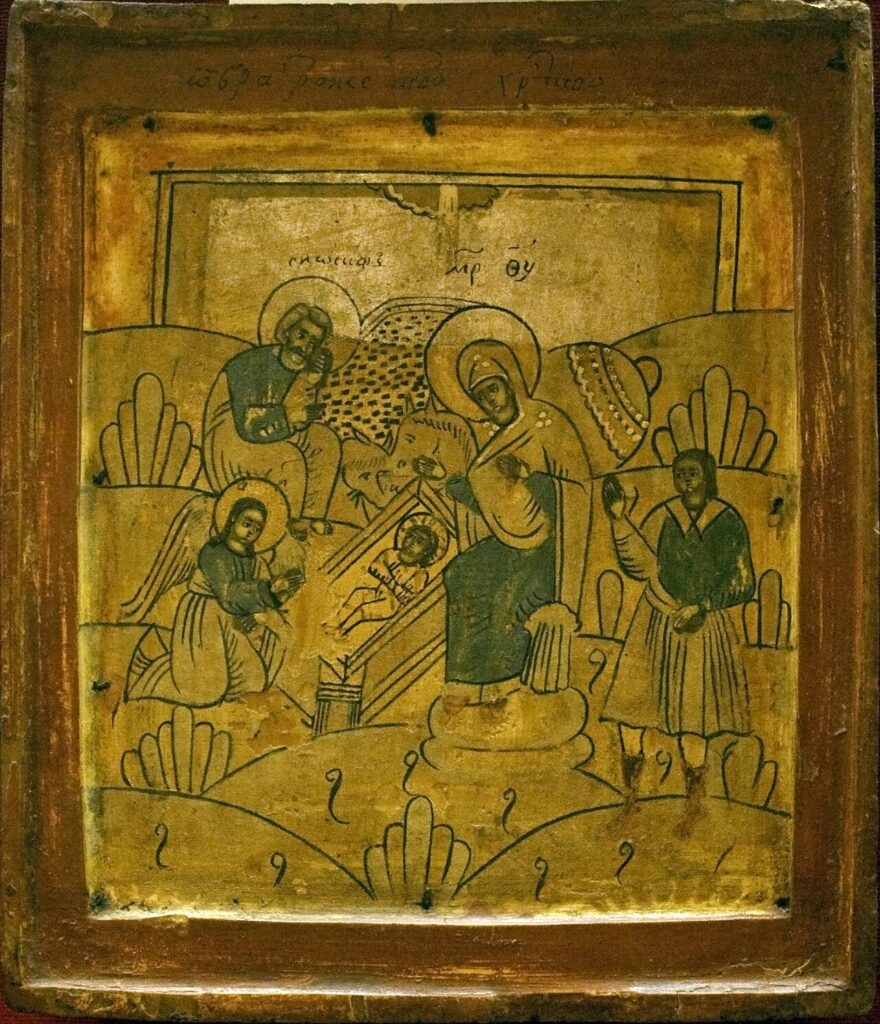
Christians around the world share the same feast but observe it in strikingly different ways. The differences in date and custom are some of the most interesting features of Christmas.
Catholic Christmas
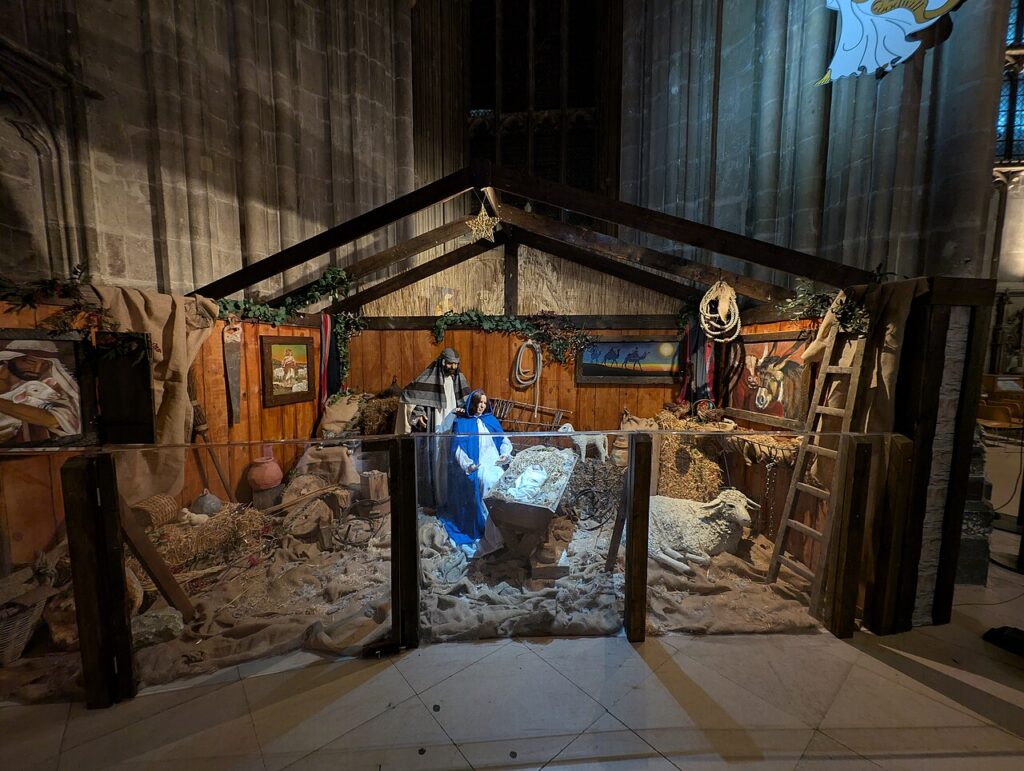
In the Roman Catholic tradition, the celebration often begins with a vigil or Midnight Mass on Christmas Eve, a service rich in carols, candlelight, and scripture. The nativity scene, a model of the stable with figures of the holy family, shepherds, and animals, is a central devotion. It is traditionally credited to Saint Francis of Assisi, who is said to have set up a living manger scene in the Italian town of Greccio in 1223 to help ordinary people picture the humble birth.
Protestant Christmas
Protestant churches keep many of the same customs, with a strong emphasis on Advent, carols, and the reading of the Christmas story. The service of Lessons and Carols, which alternates Bible readings with hymns, is a much loved example. History holds an irony here. Some early Protestants, especially the Puritans, opposed Christmas because they found no command to keep it in the Bible, and for a time it was even banned in 17th century England and in colonial Massachusetts. The festive, family centered Christmas returned in strength only later.
Orthodox Christmas and the January 7 Question
A common question is why many Orthodox Christians celebrate on January 7 rather than December 25. The answer is the calendar, not a different date for the birth. These churches still keep the feast on December 25, but they reckon it by the older Julian calendar, which now runs 13 days behind the Gregorian calendar used in everyday life. December 25 on the Julian calendar falls on January 7 on the modern one.
The churches that celebrate on January 7 include the Russian, Serbian, Georgian, and Jerusalem Orthodox churches, which still follow the Julian calendar for the feast, along with the Ethiopian and Coptic churches, which keep their own ancient calendars that fall on the same day. But not all Orthodox do. The Greek Orthodox Church and the Ecumenical Patriarchate, which follow a revised calendar, keep Christmas on December 25. The Armenian Apostolic Church is different again, joining the Nativity and Epiphany into a single feast on January 6. Most Eastern churches also keep a Nativity Fast of about forty days before the feast, a quiet preparation a little like Advent.
Living the Season: Faith in Practice
For believers, the religious meaning of Christmas is not only something to understand but something to do. The weeks of Advent are a time to prepare inwardly as well as outwardly. Many Christians use the season for extra prayer, for acts of charity toward the poor, and in some traditions for confession before the feast.
The home becomes part of the worship too. Families set up a nativity scene, light the candles of the Advent wreath at dinner, and read the Christmas story aloud on Christmas Eve. After the quiet of Advent comes the feasting of the twelve days, a deliberate swing from waiting to celebration. In this way the calendar itself teaches the meaning of the season, marking time around the birth rather than around the shops.
The Story Sung: Carols and Their Meaning
Much of the religious meaning of Christmas is carried not in sermons but in song. The best loved carols are small statements of belief set to music. “Silent Night,” written in an Austrian village in 1818, dwells on the peace of the holy night. “O Come All Ye Faithful,” translated from an old Latin hymn, is an open call to come and adore the newborn Christ. “Hark the Herald Angels Sing,” by Charles Wesley, packs the whole idea of the Incarnation into a single line about God made flesh, and “Joy to the World” turns the birth into a burst of public rejoicing.
This is why carols remain central to Christmas worship in every tradition. They let a whole congregation tell the Nativity story together, and they carry its meaning to people who may never open a Bible. A familiar tune can preach as plainly as any reading.
The Meaning That Endures
For all the variety of dates and customs, the religious heart of Christmas is steady. The feast marks a single claim: that God entered the world as a vulnerable child, born in poverty, welcomed first by shepherds, and revealed to the nations. Everything else, the candles of Advent, the twelve days of feasting, the kings at Epiphany, grows out of that one event.
Even the custom of giving gifts has a religious root. Christians have long connected it to the gifts the Magi carried to Bethlehem, and beyond that to the belief that the birth itself was a gift freely given to the world. Seen in that light, the wrapped present under the tree is a small echo of the larger story around it, a reminder that the whole season began with an act of giving rather than getting, and that the giving was meant to reach the stranger as much as the family.
Understanding this side of Christmas adds depth to the season even for those who do not share the faith. The gifts and the lights all trace back to a story about generosity, humility, and hope arriving in an unexpected place. To see how that story is lived out across cultures, explore our guide to Christmas around the world, or return to the main Christmas guide.