How much do you really know about Christmas? Behind the familiar tree and tinsel lies a holiday full of surprises, from banned celebrations and royal fashions to record breaking trees and stubborn myths that simply will not die.
Here are 50 fascinating Christmas facts and trivia from around the world, every one checked against a reliable source. They are grouped by theme, and several of them set the record straight on stories you have probably heard but that turn out to be untrue. Test yourself, save a few to share over Christmas dinner, or just enjoy how strange and rich the season’s history really is. Some will make you smile, and a few may change what you thought you knew about the holiday.
For the fuller story behind these facts, see our complete guide to Christmas and our history of Christmas.
History and Origins
Christmas is far older and far stranger than the modern, cheerful version suggests. Its early history is full of debate, disapproval, and outright bans, and even the date and the meaning of the feast were argued over for centuries.
1. The Bible never gives a date for the birth of Jesus. The earliest record of December 25 being marked as his birthday comes from a Roman almanac, the Chronograph of 354, reflecting a date already observed in the year 336. The year of the birth is uncertain too, and is usually placed a few years earlier than the calendar we now use.
2. One leading explanation for the date is that early Christians fixed the conception of Jesus to March 25, the traditional date of his death, and simply counted nine months forward to December 25. Another links the date to older Roman sun festivals. Historians take both ideas seriously.
3. Christmas was once banned outright. England’s Puritan led Parliament abolished the celebration in 1647, viewing it as unscriptural and too rowdy, and the ban was unpopular enough to spark a pro Christmas riot in Canterbury that December.
4. The ban crossed the Atlantic. The Massachusetts Bay Colony outlawed Christmas from 1659 to 1681, fining anyone caught celebrating five shillings. The festive, family centered Christmas only returned in strength much later.
5. “Xmas” does not cross Christ out of Christmas. The X is the Greek letter chi, the first letter of Christos, and has been used as a sacred shorthand for Christ since at least the 12th century. The abbreviation is far older than the modern complaint about it.
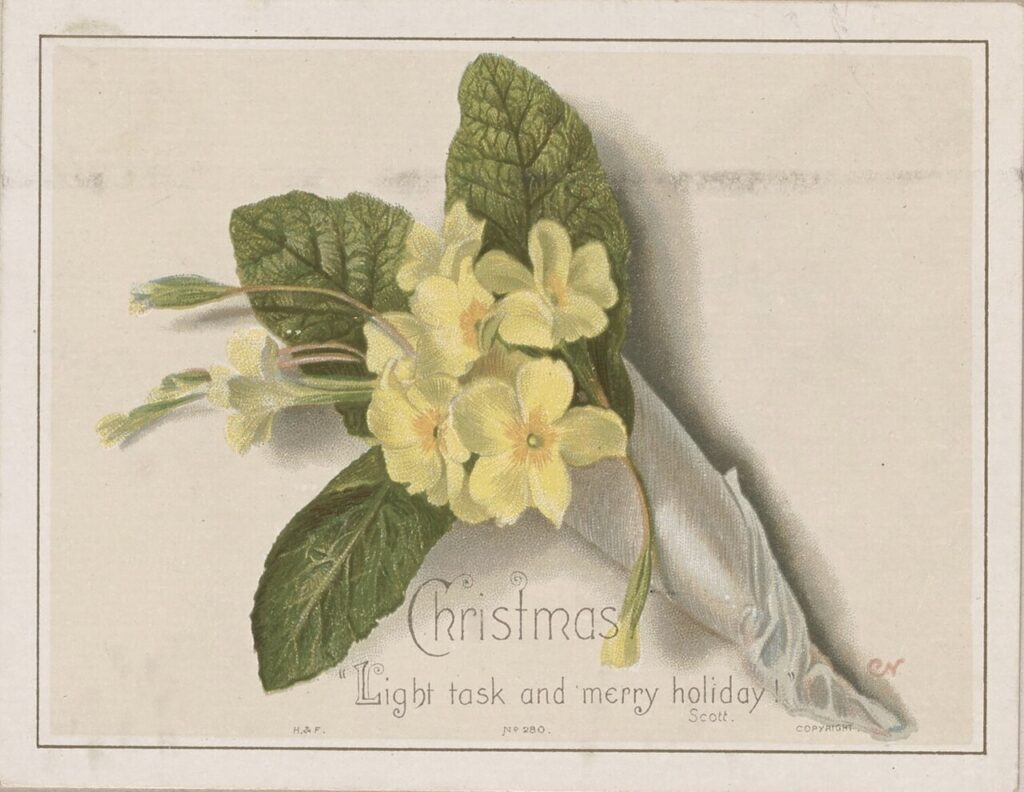
6. The first commercial Christmas card was commissioned by Sir Henry Cole in 1843 and printed in a run of 1,000. He wanted a quick way to answer his many holiday letters. The idea took off as printing and postage grew cheaper.
7. The real Santa Claus was a 4th century Greek bishop, Saint Nicholas of Myra, in what is now Turkey, famous for secret gift giving. The Dutch kept his memory alive as Sinterklaas, which English speakers turned into Santa Claus. You can read his story in our guide to Santa Claus and the world’s gift-bringers.
8. Christmas became a federal holiday in the United States surprisingly late, when President Ulysses S. Grant signed it into law on June 28, 1870. By then much of the modern, sentimental Christmas had already taken shape.
9. “Boxing Day,” December 26, takes its name from the British custom of giving servants and tradespeople a “Christmas box” of money or leftovers to take home. It has nothing to do with the sport or with returning unwanted gifts.
10. For the first three centuries of Christianity, the birth of Jesus was not celebrated at all. Easter and Epiphany were the major feasts, and a dedicated Christmas festival came only later, in the 4th century.
Food and Drink
The Christmas table has a history of its own, full of dishes that have changed beyond recognition and customs that took root in unexpected places. What ends up on the plate says as much about a country as any other tradition.
11. In Japan, Christmas dinner is often a bucket of fried chicken. The tradition was cemented by a wildly successful 1974 KFC campaign called “Kentucky for Christmas,” in a country where Christmas is festive but not religious.
12. The custom is so strong that Christmas Eve is now KFC Japan’s busiest day of the year, with some outlets selling around ten times their usual daily total. Many families order their festive chicken weeks in advance.
13. Eggnog has a medieval ancestor. It descends from a warm British drink called “posset,” made from milk or cream curdled with wine or ale and spiced. It grew especially popular in America, where it remains a Christmas party staple.
14. The British “Stir-Up Sunday,” when families traditionally make the Christmas pudding, is named after a prayer. The Book of Common Prayer collect for that Sunday begins, “Stir up, we beseech thee, O Lord,” and tradition says everyone takes a turn stirring and makes a wish.
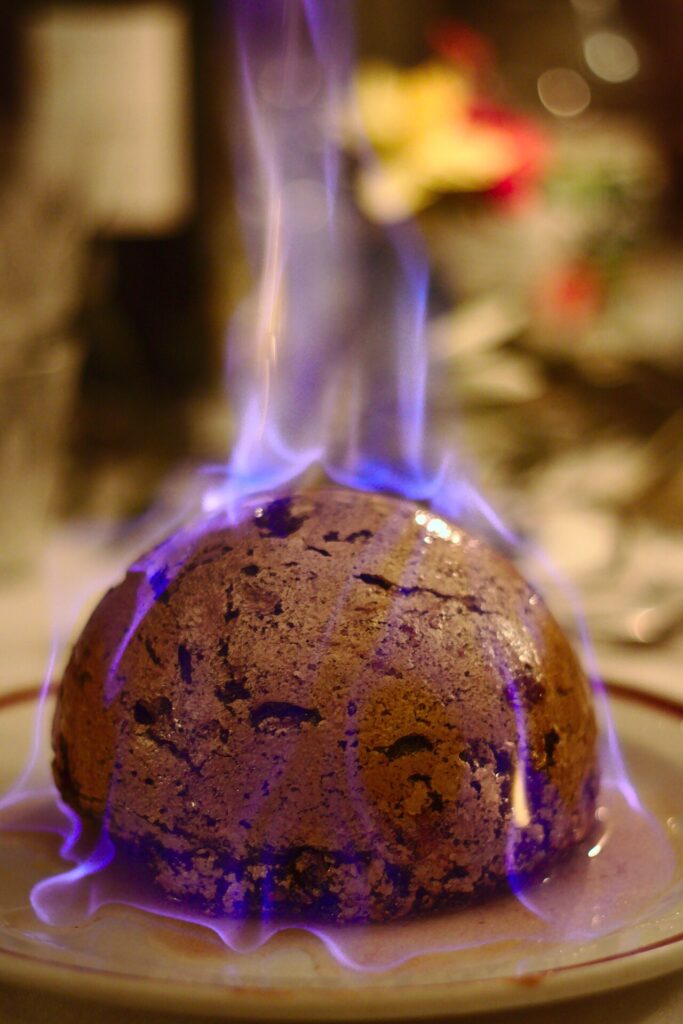
15. The Christmas pudding began as a savory dish. Its medieval ancestor was a meat based pottage of fat, spices, fruit, and grains that only slowly turned into the sweet, dark dessert we know, flamed with brandy at the table.
16. Mince pies tell a similar story. They once contained real minced meat, which faded out over the centuries to leave the spiced dried fruit filling of today. British folklore even says eating one on each of the twelve days of Christmas brings luck.
17. In Japan, the standard festive dessert is a light strawberry sponge known simply as “Christmas cake,” whose red and white colors have become a symbol of the season. It is ordered well ahead, much like the famous fried chicken.
Around the World
Christmas may be one holiday, but it is celebrated in wildly different ways across the globe. Some of the most surprising customs come from the most unexpected places, and many are far older than the modern, commercial version of the day.
18. The Philippines holds the world’s longest Christmas season. Carols and decorations appear as early as September, the start of the “ber” months, and the festivities run well into January, making it a four month celebration.
19. In Iceland, families exchange books on Christmas Eve and read them through the night, a tradition called Jólabókaflóð. It grew out of wartime paper supplies, when books were one of the few gifts not heavily restricted, and most of the country’s new titles are still published in the weeks before Christmas.
20. Icelandic children are visited not by one Santa but by thirteen mischievous Yule Lads, who arrive one a night before Christmas. A well behaved child finds a treat in a shoe left on the windowsill, while a naughty one gets a raw potato.
21. In Caracas, Venezuela, some streets are closed to traffic on Christmas mornings so that people can roller-skate to early Mass. It is a uniquely local twist on the dawn services held across the Catholic world.
22. In Catalonia, children look after a hollow log called the Caga Tió, feeding it scraps from early December and covering it with a blanket. On Christmas they beat it with sticks so it “drops” sweets and small gifts, singing a song to encourage it along.
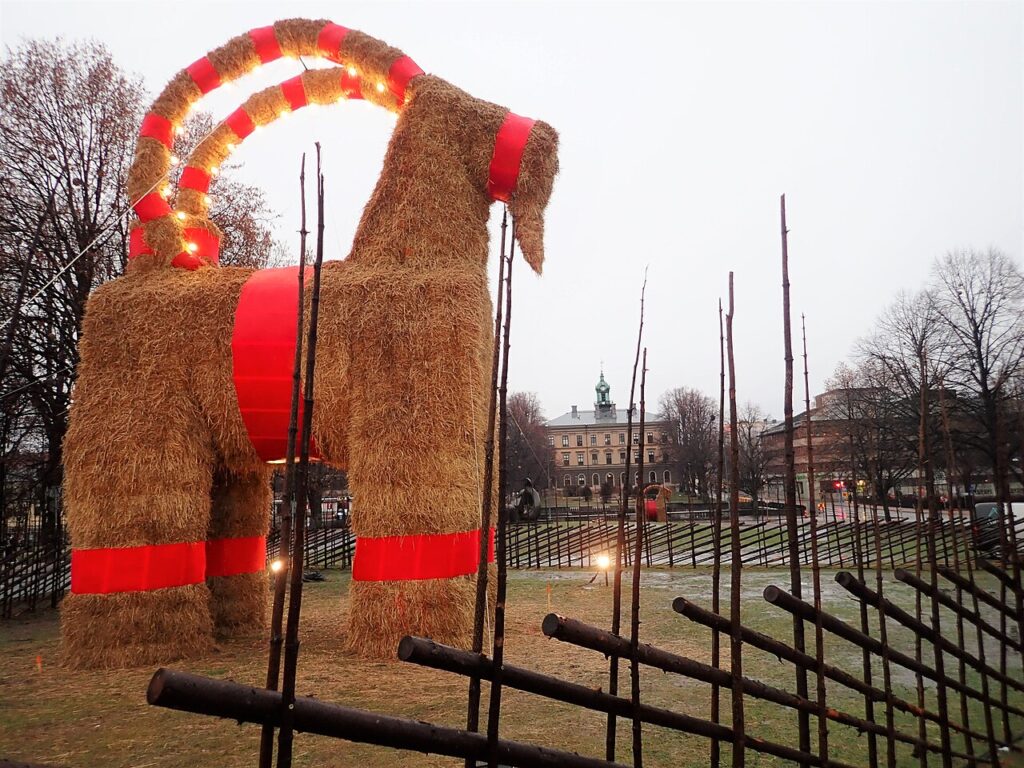
23. Each year the Swedish town of Gävle builds a giant straw Yule Goat. Since 1966 it has become a target for vandals, and it has been burned down far more often than it has survived, turning its fate into a yearly spectator sport.
24. Tinsel may owe its existence to a spider. A folk legend from Eastern Europe tells of spider webs on a poor family’s tree that turned to silver and gold in the morning light, a story still told to explain the shimmering strands we drape today.
25. By old Norwegian folklore, witches and evil spirits roam on Christmas Eve in search of brooms to ride, so some households still tuck their brooms out of sight before bed. It is one of many midwinter superstitions that survive as gentle tradition.
26. In the city of Oaxaca, Mexico, December 23 is the Night of the Radishes, when artisans carve large radishes into detailed nativity and village scenes for a one night competition that draws big crowds. The custom dates back to the 1890s.
27. Many of these customs and more appear in our guide to Christmas around the world, which tours 25 countries and the unique tradition behind each one.
Records and Numbers
Christmas inspires people to go big, and the record books are full of festive feats. These figures are drawn from the official record keepers, so they are the genuine article rather than the inflated numbers that often circulate online.

28. The tallest cut Christmas tree on record was a 64.6 meter, or 212 foot, Douglas fir put up at a shopping center in Seattle in December 1950. That is roughly the height of a twenty story building.
29. The first electric Christmas tree lights were the work of Edward H. Johnson, a colleague of Thomas Edison, who hand wired a string of bulbs on a tree in New York in 1882. Before electric lights, trees were lit with real candles, a beautiful but dangerous practice.
30. The Rockefeller Center tree in New York is usually a Norway spruce of around 70 to 100 feet, strung with roughly 50,000 LED lights and crowned with a Swarovski star set with more than three million crystals. It has been a tradition since the 1930s.
31. Bing Crosby’s “White Christmas” is recognized as the best selling single of all time, with estimated sales above 50 million copies. No other Christmas song comes close.
32. Rudolph the Red Nosed Reindeer was an instant hit. His debut booklet was handed out in 2.4 million copies in its very first year, 1939, by the store that created him.
33. The largest Christmas stocking ever made, the work of an Italian community group, measured more than 50 meters long, far taller than the building it was hung from. It was filled, fittingly, with toys and sweets.
34. The largest gathering of people dressed as Santa Claus was 18,112, set in Thrissur, in the Indian state of Kerala, on December 27, 2014, as part of a Christian festival.
Symbols and Traditions
The objects and songs of Christmas all have a back story, and several of them are nothing like the legends that have grown up around them. The truth is often more interesting than the myth.
35. Rudolph the Red Nosed Reindeer was not an ancient legend but a marketing idea. He was created in 1939 by a copywriter named Robert L. May for the Montgomery Ward department store, which gave the booklet away to shoppers.
36. “Jingle Bells” was not written as a Christmas song. Published in 1857 as “The One Horse Open Sleigh,” it was a secular song about winter sleigh racing, and it mentions neither Christmas nor any religious theme.
37. Christmas tinsel was once a real luxury. It was originally made from shredded silver in early 1600s Nuremberg, which is why it shimmered so brightly in candlelight, though the silver tarnished and was later replaced.
38. The poinsettia takes its name from Joel Roberts Poinsett, the first United States minister to Mexico, who introduced the bright red plant to the United States in 1828. In Mexico it is called the Flor de Nochebuena, the Christmas Eve flower.
39. Poinsettias are not deadly. A review of nearly 23,000 reported cases found no fatalities, and eating the leaves causes at most mild stomach upset, not the dangerous poisoning of popular belief.
40. The stories that the candy cane was designed as a secret Christian symbol, a J for Jesus or the shepherd’s crook, are charming but invented much later. The hook shape was most likely just a convenient way to hang it on a tree.
41. “Silent Night” was first sung on Christmas Eve in 1818 in the small Austrian village of Oberndorf, set to a melody by Franz Gruber and words by the priest Joseph Mohr. It has since been translated into hundreds of languages.
42. The Christmas tree came from Germany. It swept the English speaking world after an 1848 newspaper engraving showed Queen Victoria and her German husband Prince Albert gathered around a decorated tree. Our guide to Christmas symbols and decorations has more.
43. Mistletoe carried magic long before Christmas. It was sacred to the Druids, who cut it with great ceremony, and it appears in Norse mythology in the story of the death of the god Baldr.
Pop Culture and Surprises
The Christmas we know has been shaped as much by books, songs, and advertising as by ancient custom. The last two centuries gave the holiday many of its most familiar features, and a few of the stories behind them are genuinely surprising.
44. Charles Dickens wrote “A Christmas Carol” in roughly six weeks and published it on December 19, 1843, the same year as the first commercial Christmas card. The book helped revive a flagging holiday and shape its modern, charitable spirit, and it has never been out of print since. Its phrase “Merry Christmas” did much to popularize the greeting itself.
45. The NORAD Santa tracker began by accident in 1955, when a store advertisement in Colorado printed the wrong phone number and children calling for Santa reached a military defense center. The officer on duty kindly played along, taking calls from children asking where Santa was, and a tradition was born that continues every Christmas Eve, now followed online by millions around the world.
46. The first Christmas in space belonged to the crew of Apollo 8, who orbited the Moon on Christmas Eve 1968 and read from the Book of Genesis in a broadcast watched by hundreds of millions around the world. It was, at the time, one of the most watched television events in history.
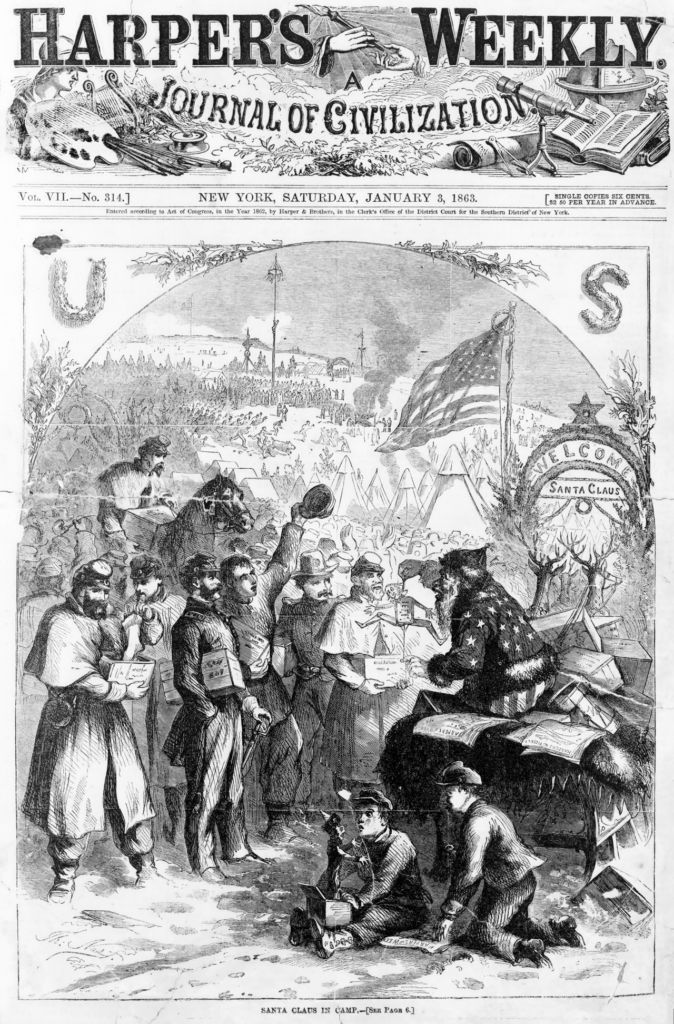
47. Coca-Cola did not invent the red suited Santa. The jolly figure in red and white was already well established before the company’s famous 1931 advertisements, which only helped to spread an image drawn earlier by artists like Thomas Nast.
48. Despite a stubborn belief to the contrary, suicides do not peak at Christmas. In the United States the rate is actually at its yearly low in December, with peaks in spring and autumn, and researchers have repeatedly debunked the holiday myth.
49. The popular tale that “The Twelve Days of Christmas” was a secret code for persecuted Catholics is an unproven modern legend. The person who first suggested it admitted the hidden meanings were his own idea, not historical fact.
50. “White Christmas” was written by Irving Berlin for the 1942 film Holiday Inn. It won the Academy Award for Best Original Song before going on to become the best selling single in history, a remarkable feat for a quiet, wistful tune.
A Few More to Finish
Fifty is a fine number, but the season has more surprises than that. Here are a handful of extras for the truly festive.
- The French word for Christmas, Noël, comes straight from the Latin for birth, the same root behind the Spanish Navidad and the Italian Natale.
- The Advent wreath, with its four candles, was the idea of a German pastor named Johann Hinrich Wichern, who built the first one in 1839 to help children count down to Christmas.
- The famous Christkindlesmarkt in Nuremberg, one of the world’s best loved Christmas markets, has been documented since 1628.
- The relics of Saint Nicholas, the bishop who became Santa Claus, have rested in the Italian city of Bari since sailors carried them there in 1087.
- The Yule log was once a real log, burned on the hearth over the midwinter feast in a custom older than Christianity itself.
- Stockings are hung because Saint Nicholas is said to have tossed gold through a window, where it landed in stockings left to dry by the fire.
- In much of Latin America, the gifts are brought not by Santa but by the Christ child, or by the Three Kings on January 6.
- Ethiopia, along with several Orthodox churches, celebrates Christmas on January 7, following an older calendar than the one most of the world now uses.
Five Christmas Myths, Busted
Among those 50 facts are several that overturn things many people firmly believe. They are worth gathering in one place, because the myths are so widespread that they are repeated every single December. Knowing the truth behind them is part of the fun, and a gentle way to surprise the table when someone trots out the old story.
- Coca-Cola did not create the red Santa. Red suited Santas appeared decades before the 1931 Coke advertisements.
- Poinsettias are not deadly poisonous. The danger has been wildly exaggerated for over a century.
- Suicides do not spike at Christmas. December is actually a low point in the year for them.
- The candy cane was not a coded Christian symbol. The pious back stories came long after the candy itself.
- “Xmas” does not erase Christ. The X is an ancient Greek abbreviation for his name.
The Last Word on Christmas Trivia
The best Christmas facts do two things at once. They surprise us, and they remind us how much history, faith, and sheer human invention is folded into a single winter holiday. A banned feast, a misprinted phone number, a marketing reindeer, and a song born in an Austrian village have all become part of the season we know and love. Each one began somewhere specific, with a real person or a real moment, and then grew into something far bigger than itself.
Keep a few of these in your back pocket for the next time the conversation turns to Christmas, and you will never be short of something to share. For more on where it all comes from, explore our guide to Christmas around the world, or return to the main Christmas guide.