Christmas in Italy is a season of faith, family, and food, stretched between two great feast days and filled with traditions that are centuries old. It begins in early December and does not end until Epiphany in January, when a kindly old witch called La Befana makes her rounds. In between come glowing nativity scenes, a meatless Christmas Eve banquet, towering sweet breads, and the sound of mountain bagpipes in the streets.
This guide walks through the customs that shape an Italian Christmas: the all important presepe, the Christmas Eve feast of la Vigilia, the famous cakes panettone and pandoro, and the cast of gift bringers from Babbo Natale to La Befana. For the wider view, see our overview of Christmas history and traditions and how the holiday is marked in countries around the world.
A Catholic Country and the Heart of the Church
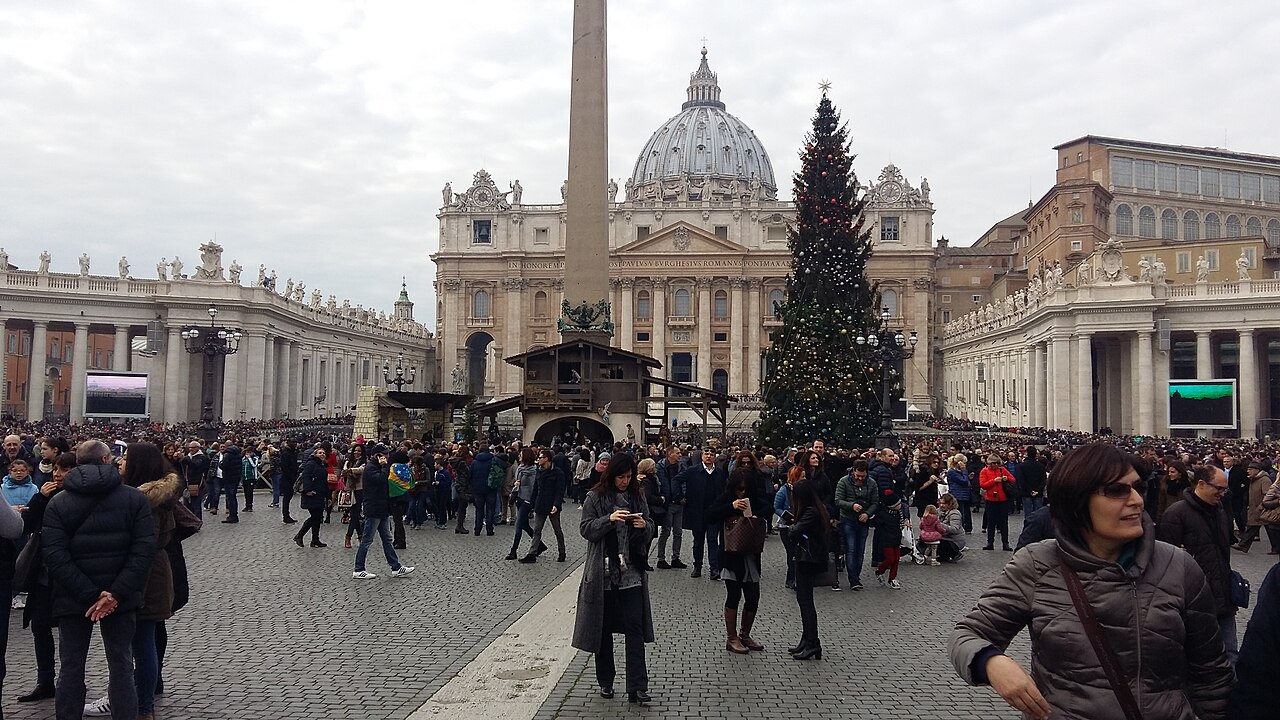
Italy is the historic heartland of Roman Catholicism and surrounds Vatican City, the seat of the Pope. That gives Christmas here a deeply religious character. On Christmas Eve the Pope leads a solemn Mass in St. Peter’s Basilica, and at noon on Christmas Day he delivers the Urbi et Orbi blessing, “to the city and to the world,” from the basilica’s central balcony to crowds packed into St. Peter’s Square. To wish someone a merry Christmas, Italians say Buon Natale.
A Season Between Two Feasts
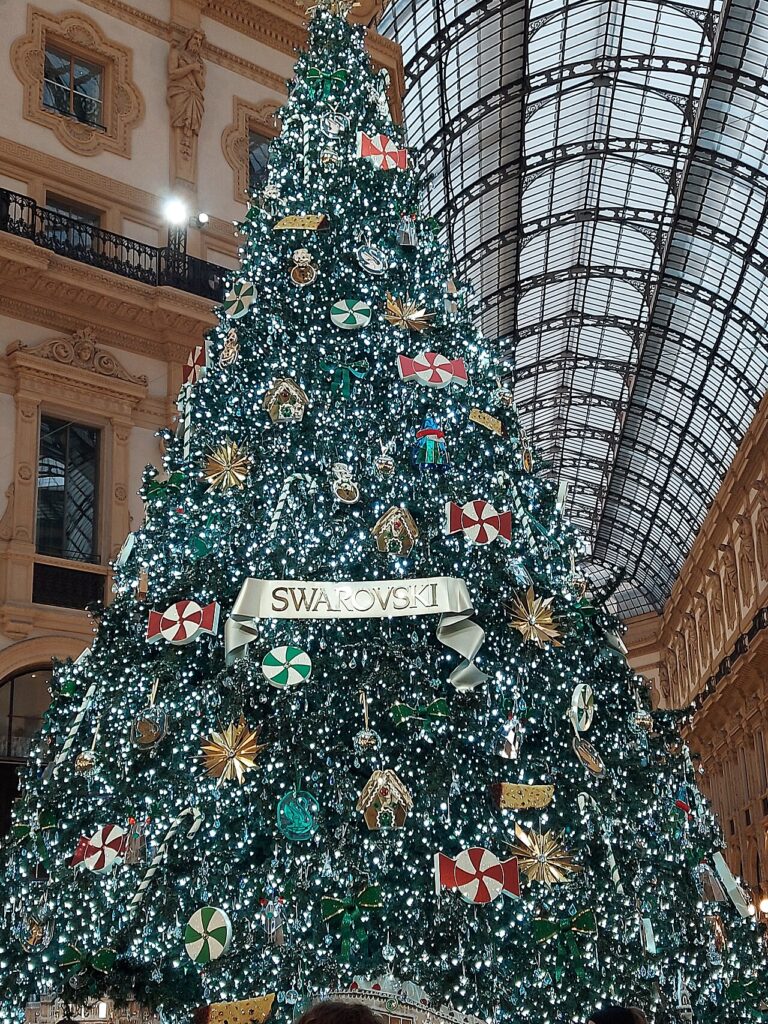
The Italian Christmas season has a clear beginning. It opens on December 8, the Feast of the Immaculate Conception, known as l’Immacolata. The day is a national holiday, and it is when many families set up the Christmas tree and, more importantly, the nativity scene. From there the celebrations build through Christmas and run all the way to January 6.
An old proverb sums up the calendar neatly: “L’Epifania tutte le feste porta via,” meaning Epiphany carries all the holidays away. When the Three Kings reach the manger, the season is over and ordinary life resumes.
Older customs still surface here and there. In parts of Tuscany the ceppo once named both a Yule log burned on the hearth through the season and a wooden, tree shaped tier of shelves used to hold the presepe figures, small gifts, and sweets, a kind of early Italian Christmas tree before the evergreen took over.
The Presepe: The Soul of an Italian Christmas
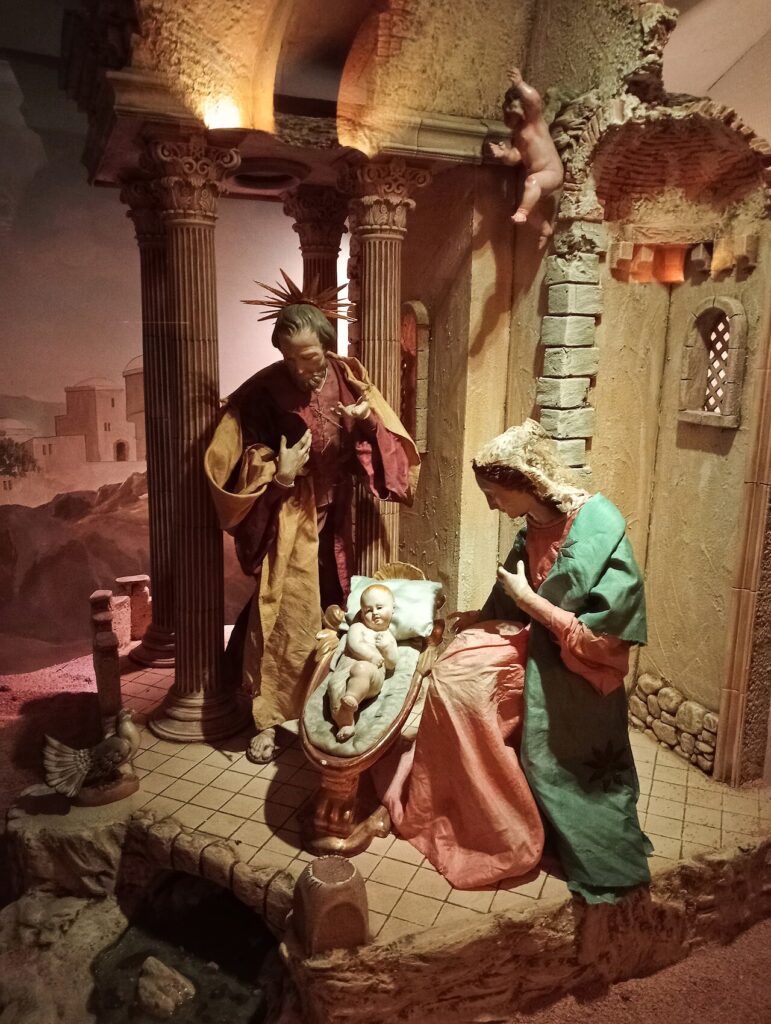
If one tradition stands above the rest, it is the presepe, the nativity scene. In many Italian homes it has traditionally mattered as much as the tree, and often more. A presepe can be a modest set on a side table or an elaborate landscape of cork hills, tiny houses, running water, and dozens of figures, built up lovingly over years.
Nowhere is the craft more celebrated than in Naples, where the narrow street of Via San Gregorio Armeno is lined year round with workshops making handcrafted figures. Alongside the Holy Family, shepherds, and the Magi, Neapolitan artisans add everyday characters and even cheeky figures of famous politicians and celebrities, so each scene becomes a small portrait of the year.
The tradition has deep roots. Saint Francis of Assisi is credited with staging the first live nativity in the town of Greccio in 1223, using real people and animals to bring the Christmas story to life, and with popularizing the nativity scene across Europe. That living version survives today: towns from Greccio to Matera still stage a presepe vivente, a nativity acted out by costumed locals. In the home, the figure of the baby Jesus, the bambinello, is traditionally laid in the manger at midnight on Christmas Eve, and the Three Kings are moved into the scene on January 6.
La Vigilia: The Christmas Eve Feast
Christmas Eve, la Vigilia, brings the most anticipated meal of the season. In keeping with the old Catholic custom of abstaining from meat before a feast day, the Christmas Eve dinner, the cenone, is traditionally meatless and built around fish and seafood.
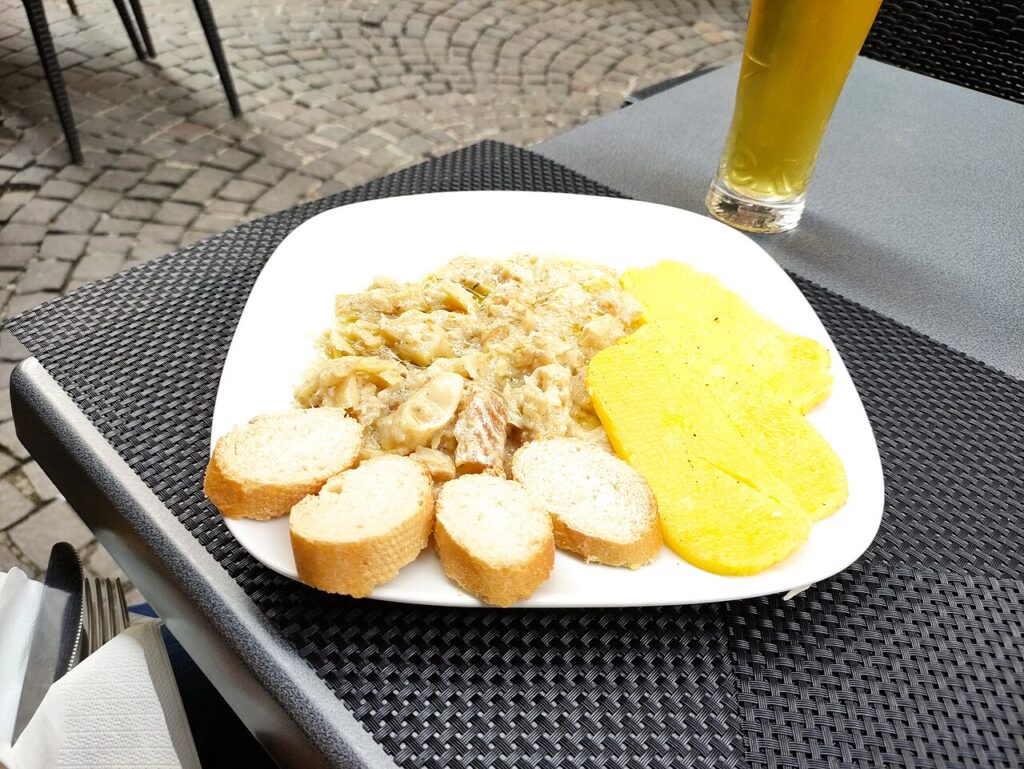
In the United States, Italian American families turned this into the famous Feast of the Seven Fishes, a name and a fixed count that are largely an American elaboration. In Italy itself there is no set number, but the spirit is the same. Tables fill with dishes like baccalà, salt cod, and capitone, the large eel that is a Christmas Eve classic in the south, along with fried vegetables, pasta with seafood, and clams. The feast often comes before or after attending Midnight Mass.
Christmas Day at the Table
If Christmas Eve belongs to fish, Christmas Day, il pranzo di Natale, belongs to meat and to the regions. The long lunch on December 25 is where Italy’s local kitchens shine. In Emilia families open with tortellini in brodo or cappelletti, little stuffed pasta floating in a rich capon broth. Piedmont serves agnolotti, the south brings out baked lasagne, and a roast, capon, or stuffed turkey often follows. The meal can stretch for hours, course after course, with relatives crowded around one long table.
Through it all the family plays tombola, the Neapolitan cousin of bingo, its numbers tied to a folk dream-book of meanings. Cards are marked with beans or orange peel, and small coins change hands amid plenty of laughter.
Panettone, Pandoro, and Christmas Sweets
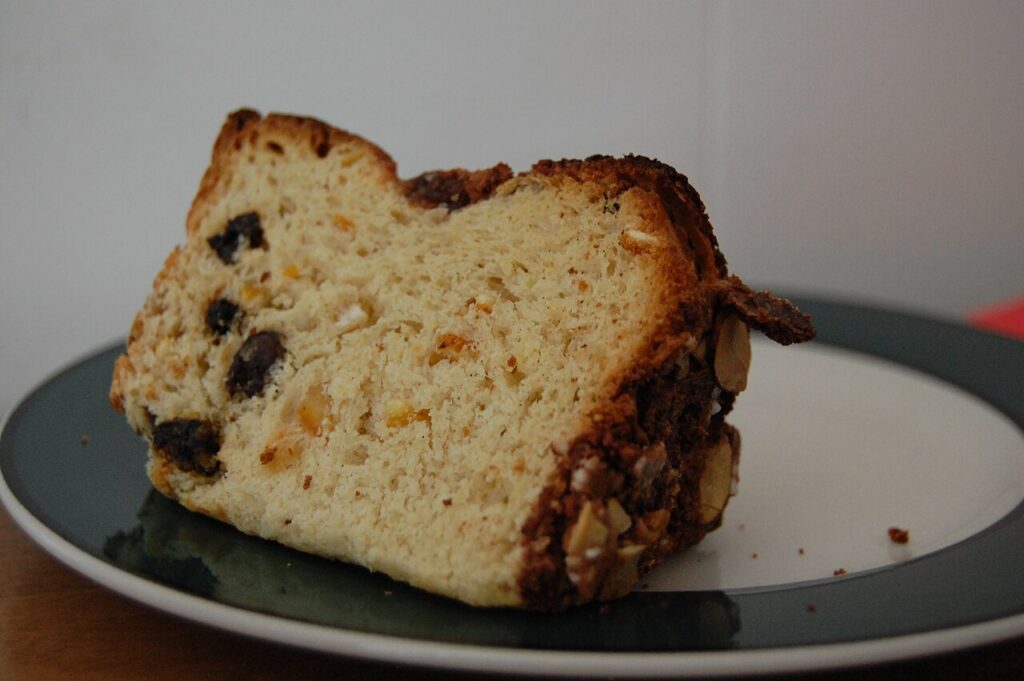
No Italian Christmas table is complete without its sweets, and two cakes reign over all the others. Panettone is the tall, domed sweet bread studded with raisins and candied fruit that hails from Milan. Pandoro, its golden, star shaped rival from Verona, has no fruit and arrives under a snowfall of powdered sugar. Italians debate which is better with real passion.
Beyond the two giants, the regions offer their own treasures. There is torrone, a nougat of honey, sugar, and almonds, panforte, the dense spiced fruit and nut cake of Siena, and struffoli, the little honey drenched dough balls piled high in Naples. Each region defends its specialty.
The Gift Bringers
Italy has not one Christmas gift bringer but several, and which one visits depends on the region and the family.
- Babbo Natale, Father Christmas, the Italian Santa Claus, who comes on the night of December 24 and is now the most widespread.
- Gesù Bambino, the Baby Jesus, traditionally credited with bringing gifts in many devout households.
- Santa Lucia, who in parts of the north, around Bergamo, Brescia, Verona, and Mantua, brings presents on the night of December 12 to 13, arriving with a donkey while children sleep.
- La Befana, the old woman of Epiphany, who closes the season on January 6.
La Befana and the End of the Season
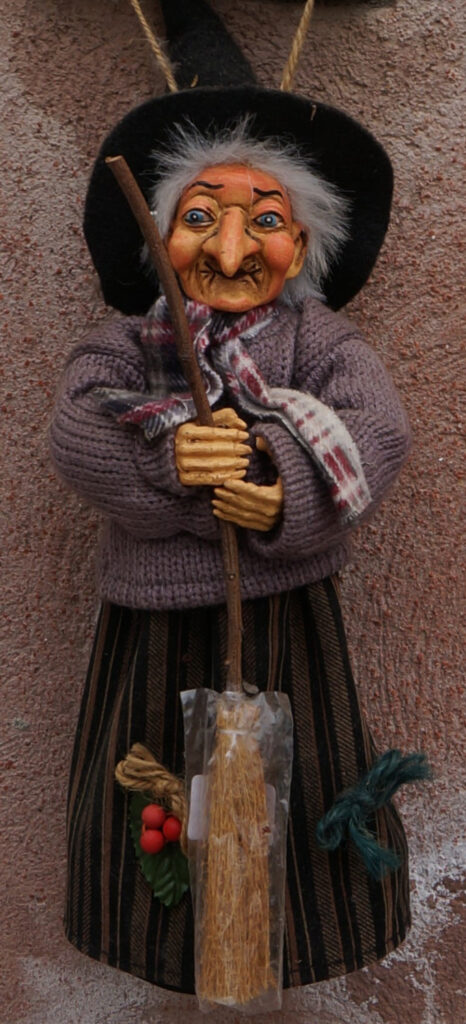
The most distinctly Italian gift bringer is La Befana. According to legend she is a kindly old woman, often drawn as a friendly witch, who flies from house to house on a broomstick on the night of January 5. The name comes from Epifania, the Italian word for Epiphany.
The story says the Three Kings invited her to join their journey to see the Christ child, but she was too busy and missed her chance, and so she still searches house to house, leaving gifts for children along the way. She fills good children’s stockings with sweets and small toys, and for the naughty ones she leaves carbone, lumps of coal, though these days the coal is usually a sweet black rock candy. For generations of Italian children, La Befana, not Santa, was the great gift giver of the season.
Zampognari: The Sound of Christmas
In the weeks before Christmas, a sound drifts through towns across central and southern Italy: the wheeze and drone of bagpipes. These are the zampognari, traditional pipers who once came down from the mountains of regions like Abruzzo and Molise to play pastoral Christmas tunes in the streets and outside churches and nativity scenes. They are often paired with a player on a wooden shawm, and their melodies are tied to the beloved carol “Tu scendi dalle stelle,” written in 1754 by the Neapolitan bishop Saint Alphonsus Liguori and based on an older song in the Naples dialect, “Quanno nascette Ninno.” For many Italians, the drone of the zampogna is the true opening note of Christmas.
From Christmas to Epiphany
Italian Christmas is not a single day but a long, unhurried stretch. December 26 is another public holiday, the Feast of Santo Stefano, Saint Stephen, a day for more family meals and leftover panettone. The presepe and the tree stay up, the sweets keep coming, and many families visit a local presepe vivente or a neighbor’s nativity scene.
In the north, especially in the German speaking Alto Adige and Trentino, the season also fills the squares with mercatini di Natale, Alpine Christmas markets in towns like Bolzano and Merano. New Year’s Eve brings its own table, where lentils served with cotechino or zampone sausage are eaten for prosperity, the little lentils standing in for coins to come.
Then comes Epiphany, La Befana sweeps through one last time, and the long holiday gently closes. From the candles of l’Immacolata to the final stocking on January 6, Christmas in Italy is a season measured in faith, family, and a great deal of very good food. To see how other cultures celebrate, explore our guides to Christmas foods around the world and the gift bringers of many lands.